Category: Uncategorized
-
74: Return to Luxulyan: Rock Mill Quarry
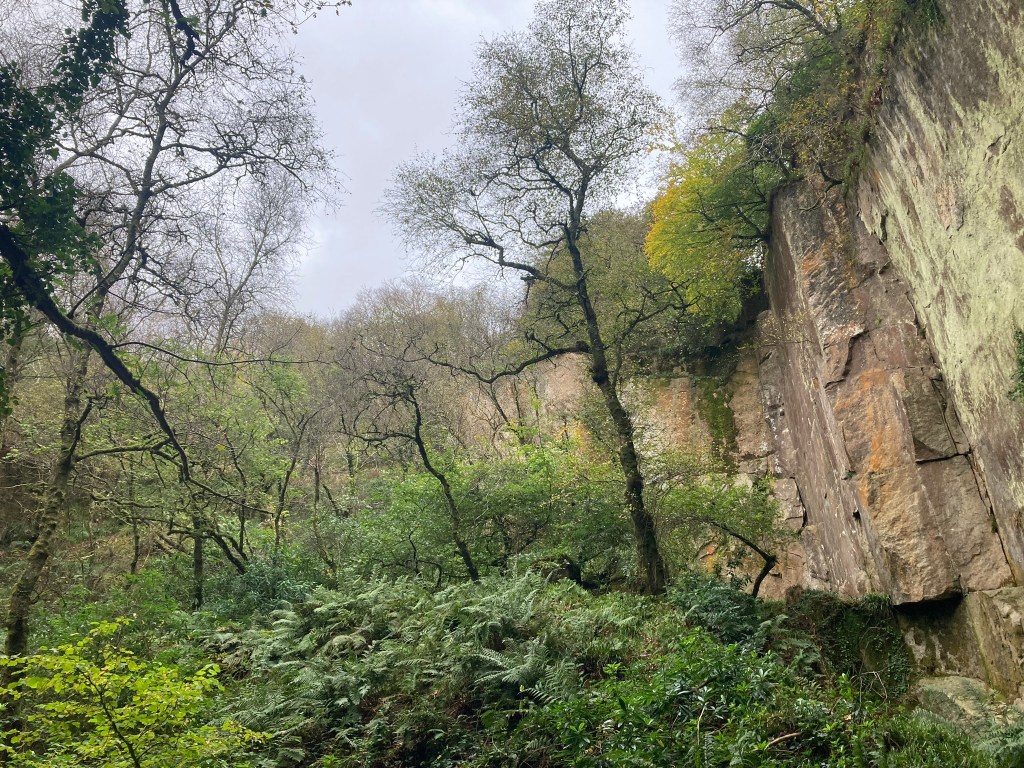
When Building London visited the awesome Luxulyan Valley, [1] “the deep and romantic gorge known as the Luxullian or Rock Valley,” [2] with it’s incredible 1842 Treffry viaduct, in 2021, as the valley was a major source of 19thC London building granite, being used in the John Rennie’s 1831 ‘New London Bridge’, now mainly in…
-
73: London Bridge … at Kew Gardens!
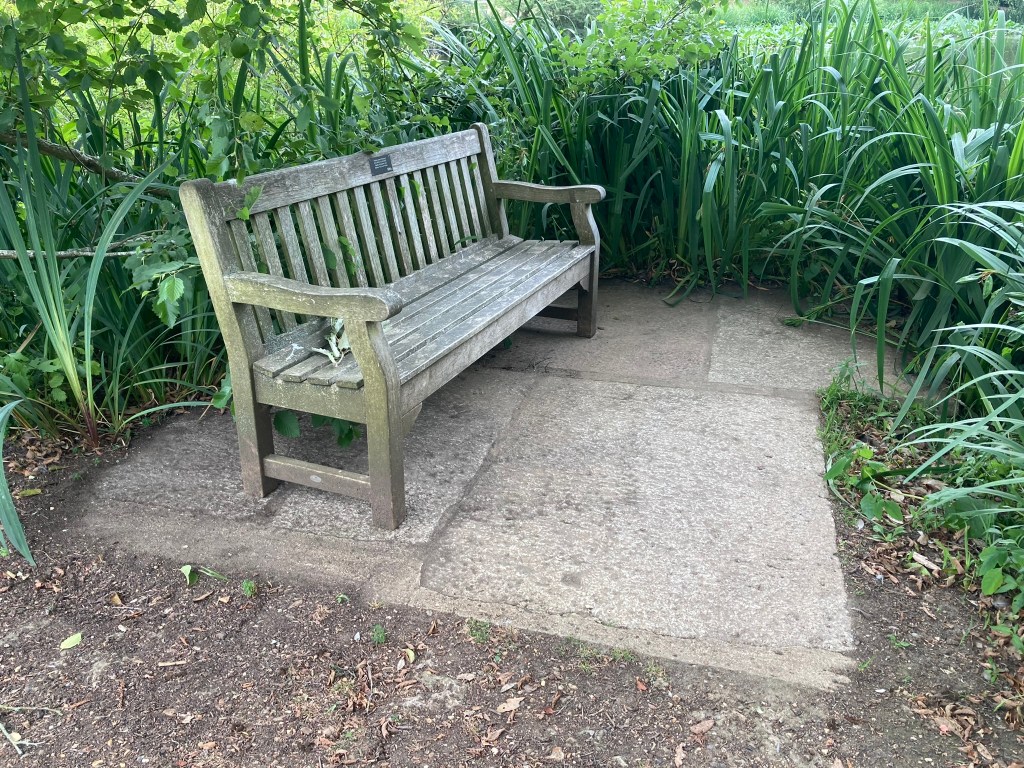
Another set of the stones identified by Vic Keegan years ago are at Kew Gardens. Keegan states “John Mowlem, the building company which demolished the bridge offered some of the surplus granite blocks – it had around 200 in all with an average weight of two tons – to Kew Gardens. Kew took four of…
-
72: More of London Bridge, or maybe not! … at Barking!
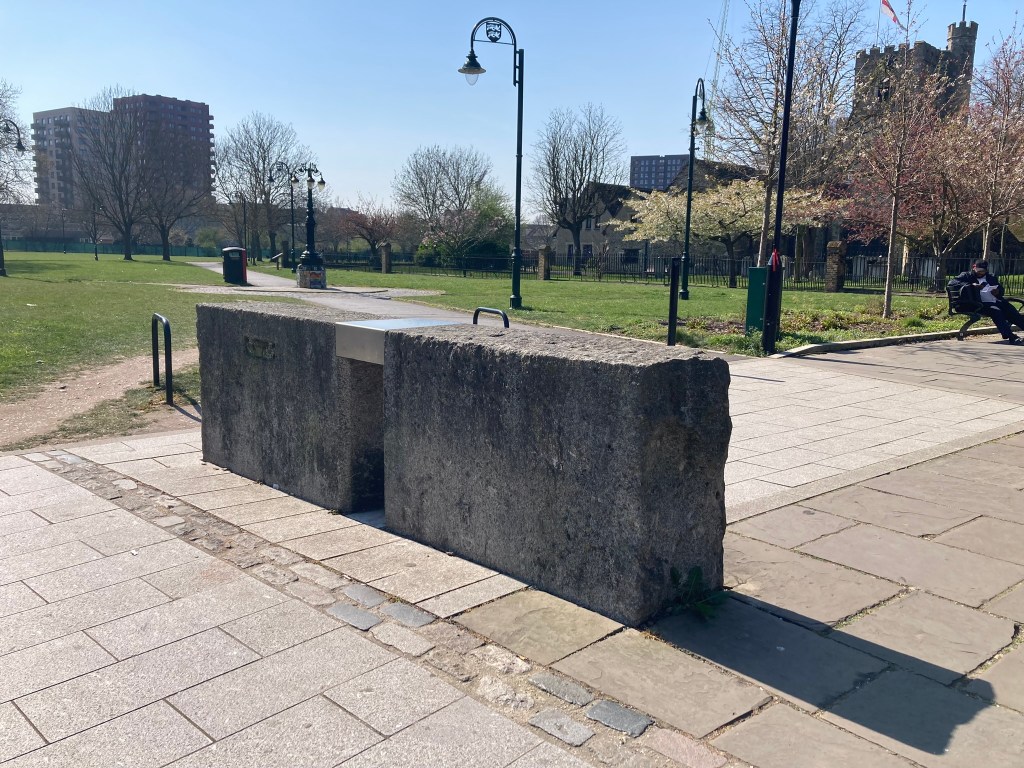
The Building London blog has blogged a lot about the wide dispersion of bits of the various London Bridges before, and here in Barking are a couple of granite blocks from Rennie’s bridge, or maybe not! Read on! See https://buildinglondon.blog/2022/02/22/31-old-london-bridge-part-2/ but note these discoveries follow other’s leads, listed below. So are they from London Bridge?…
-
71: Wells & Co, Shoreditch.
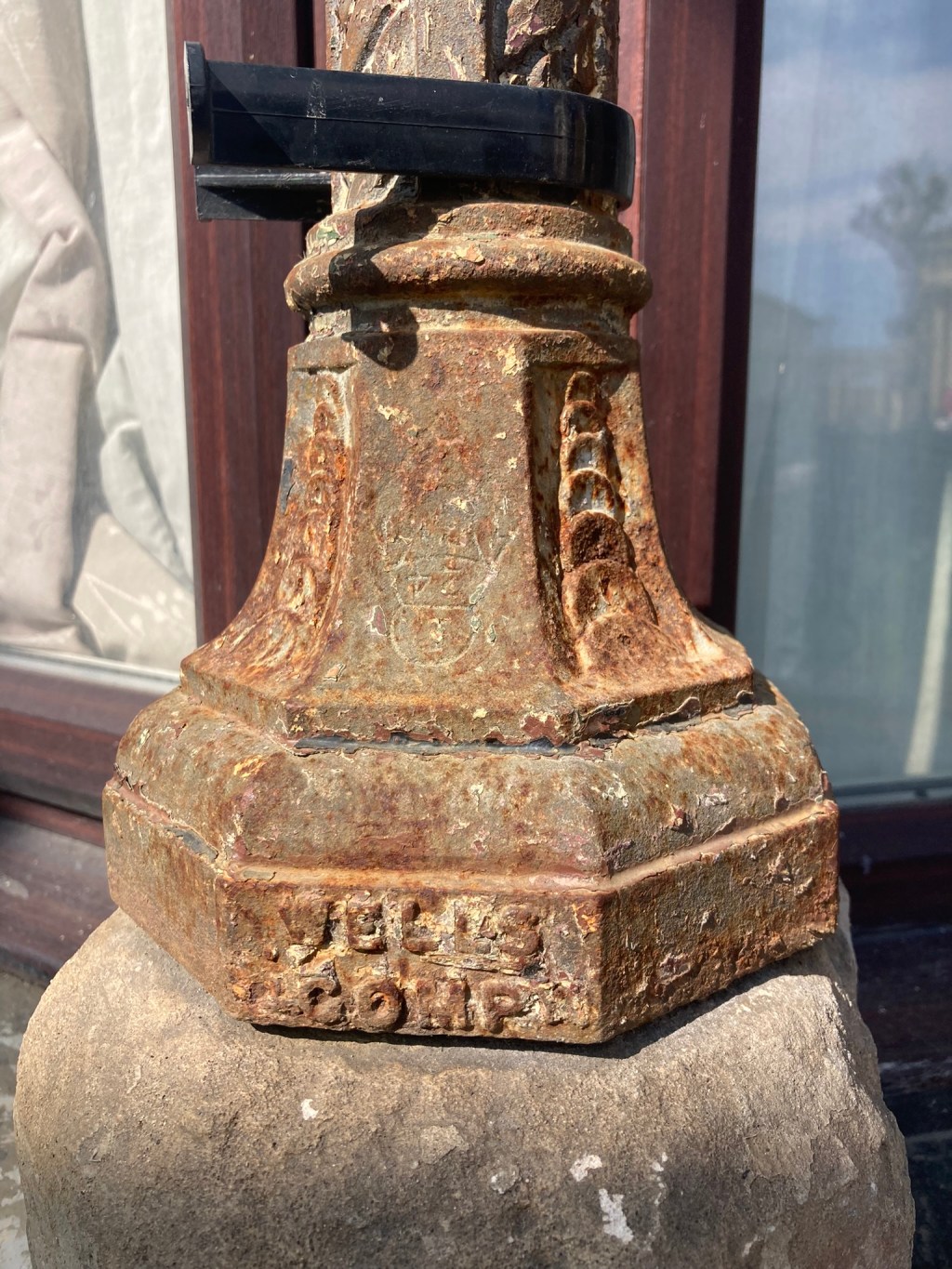
Recently spotted on a 19thC house in Linscott Road in Lower Clapton was this iron bay window pillar/support column. Unusually it had been left unpainted after a century of paint had been removed and so by chance a brand could be seen on it, ‘WELLS COMP’. There is nothing online refering to any ‘WELLS COMP’…
-
70: Joseph Hamblet ‘blue brick’ tiles, Tooley St.
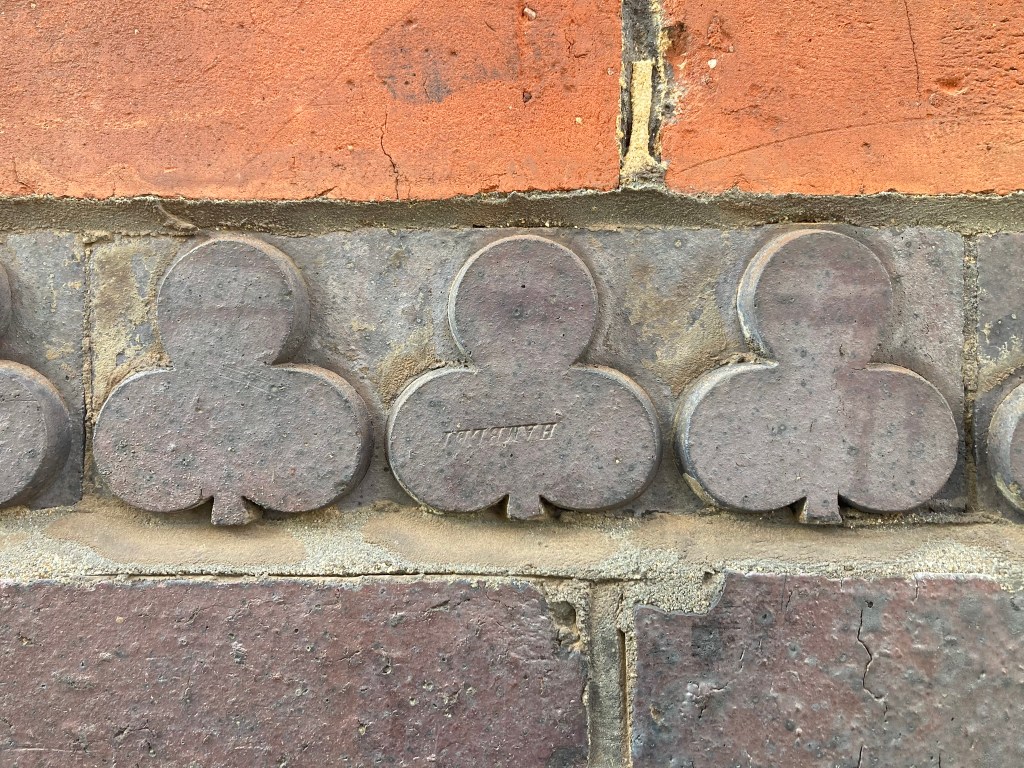
Walking along Tooley St and these blue brick tiles on a 19thC warehouse jumped out. [1] And immediately noticed they were stamped, and stamped backward, though not until after, when looked at in more detail was it spotted what there were. And no idea why they would have been stamped backward or why the contractor…
-
69: 18thC cobble road, Grove Terrace, Dartmouth Park.
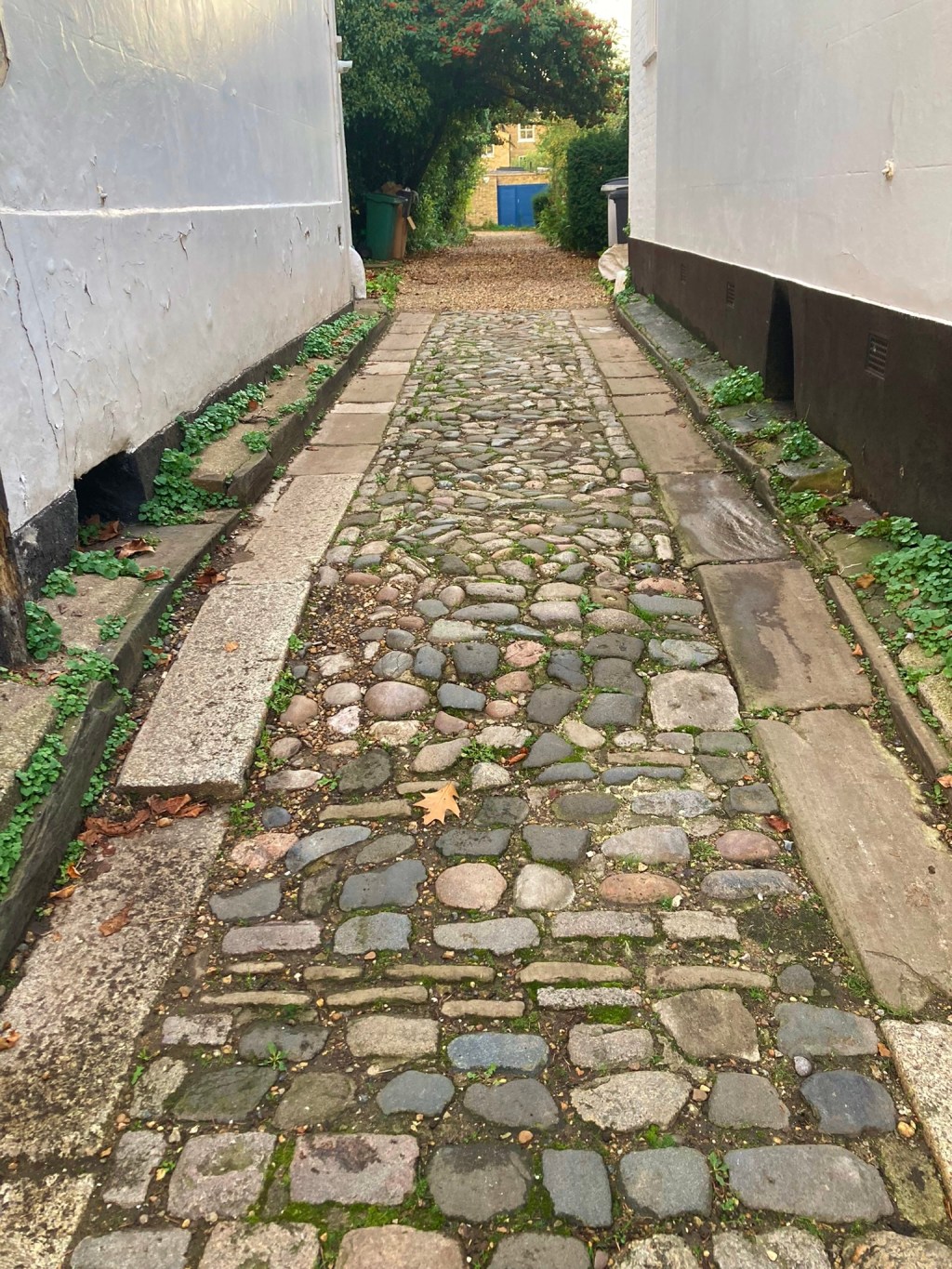
Readers will know this blog has a particular interest in old/ancient pavement and has previously suggested that the cobbles and boulders of Upper Watergate Street in Deptford may be the oldest visible and active, road surface in London – [ this bold assertion is still unchallenged! 😀 ] – and noted another very old pavement…
-
68: Return to Cheesewring
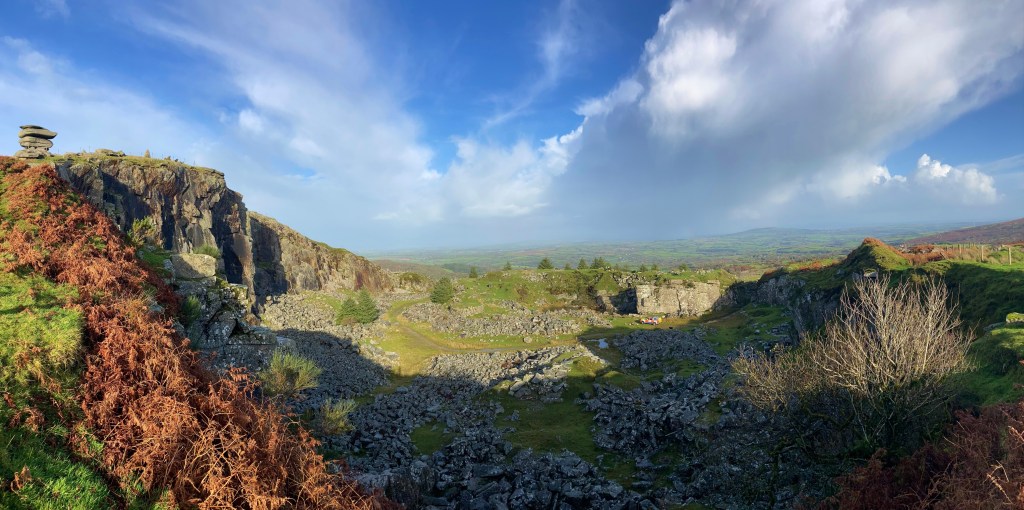
Building London first visited Cheesewring Quarry sited on the south east of Bodmin Moor in 2021 https://buildinglondon.blog/2021/08/15/7-cheesewring-quarry-on-bodmin-moor/ and returned recently. The Cheesewring quarry is near the village of Minions in Liskeard in Cornwall, once the centre of intense mining, of copper and quarrying. [1] The quarry supplied large amounts of the granite that was used…
-
67: Merrivale Quarry
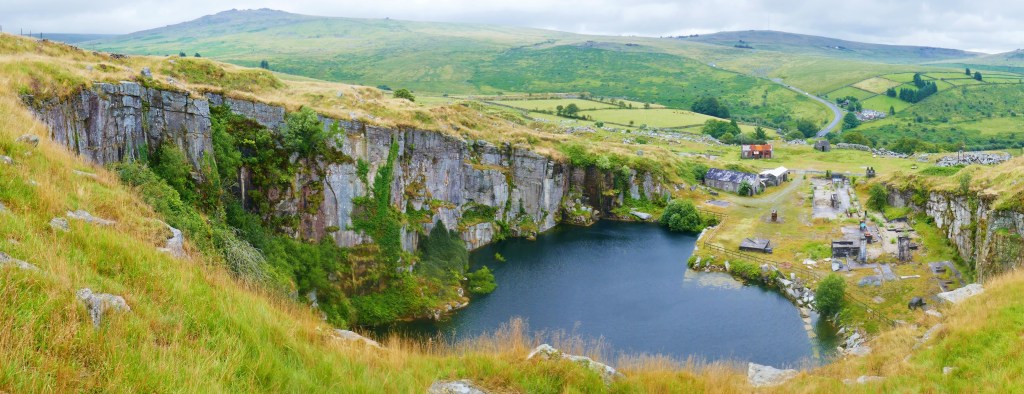
Intro Merrivale Quarry, opened as Tor Quarry in 1874, sits above the hamlet of Merrivale on the western flanks of Dartmoor, [1] [2] and across the valley of the river Walkham from Foggintor [3] and Swelltor quarries [4] and like it’s neighbours played an important, though generally more recent, role in building London. Like Foggintor…
-
66: Haytor Quarry, Dartmoor.
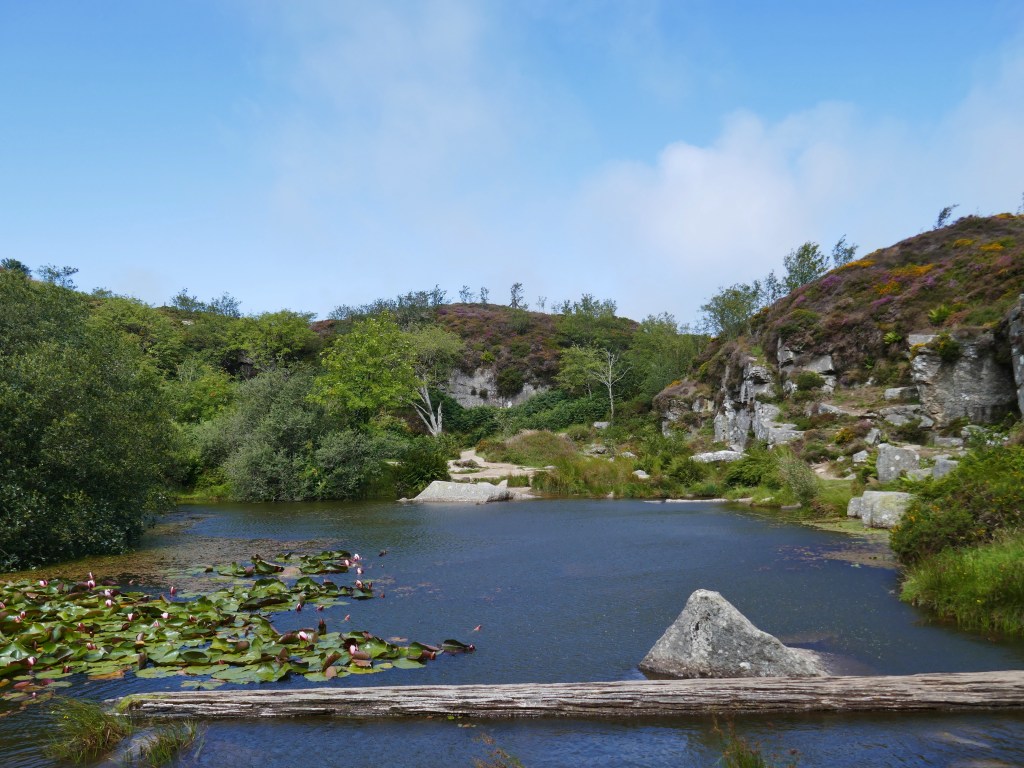
Haytor ( aka Hey Tor ) on the east of the Dartmoor plateau in Devon, near Bovey Tracey, is one of the most famous of Dartmoor’s granite Tors, remnants of 260-290 million year old igneous plutonic intrusions, [1] and the Haytor quarries beneath the tor are famous for their role in building London. Haytor refers…
-
65: The cobbles of Dean’s Yard, Westminster.
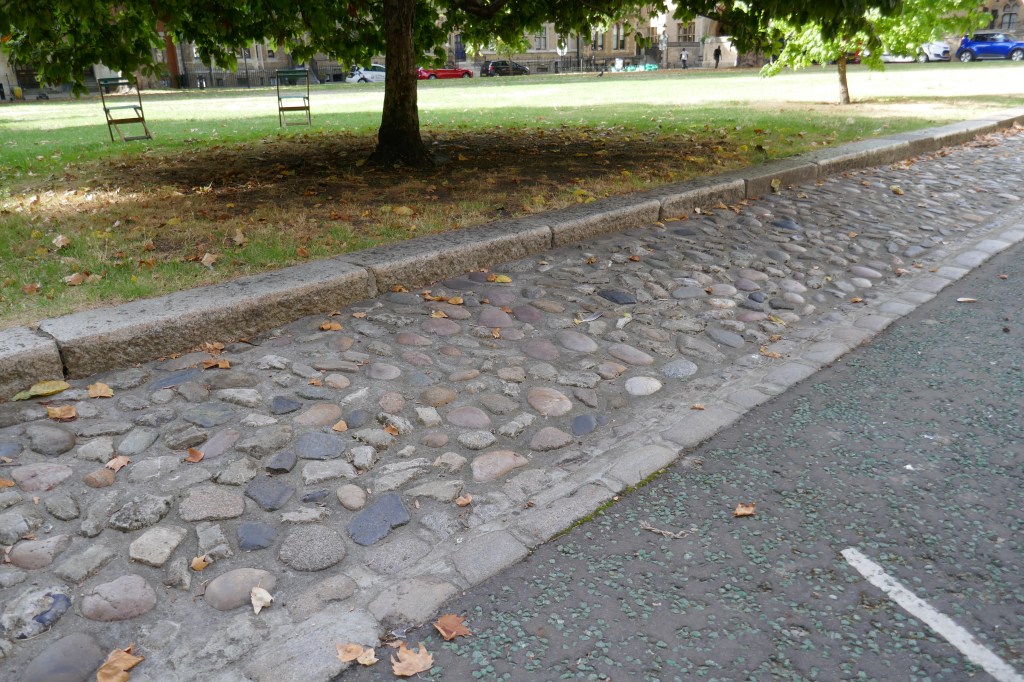
Building London loves old paving. It’s may be only 2 dimensional, it doesn’t soar and it’s usually only one material but it can be quite beautiful as well as functional and utilitarian. The patterns seen at e.g. Albury Street in Deptford or Three Mills Island show that gloriously. But it can be both hard to…
-
64: The medieval Westminster Abbey precinct wall
And in full sight, next to the Jewel Tower, is another of London’s significant medieval structures, though this time while ‘just’ a wall, it’s the magnificent ancient precinct wall of Westminster Abbey[1]. The wall separates College Garden from Abingdon Green and around the corner up Great College Street, including 5 medieval gates. The lower sections…
-
63: The Jewel Tower
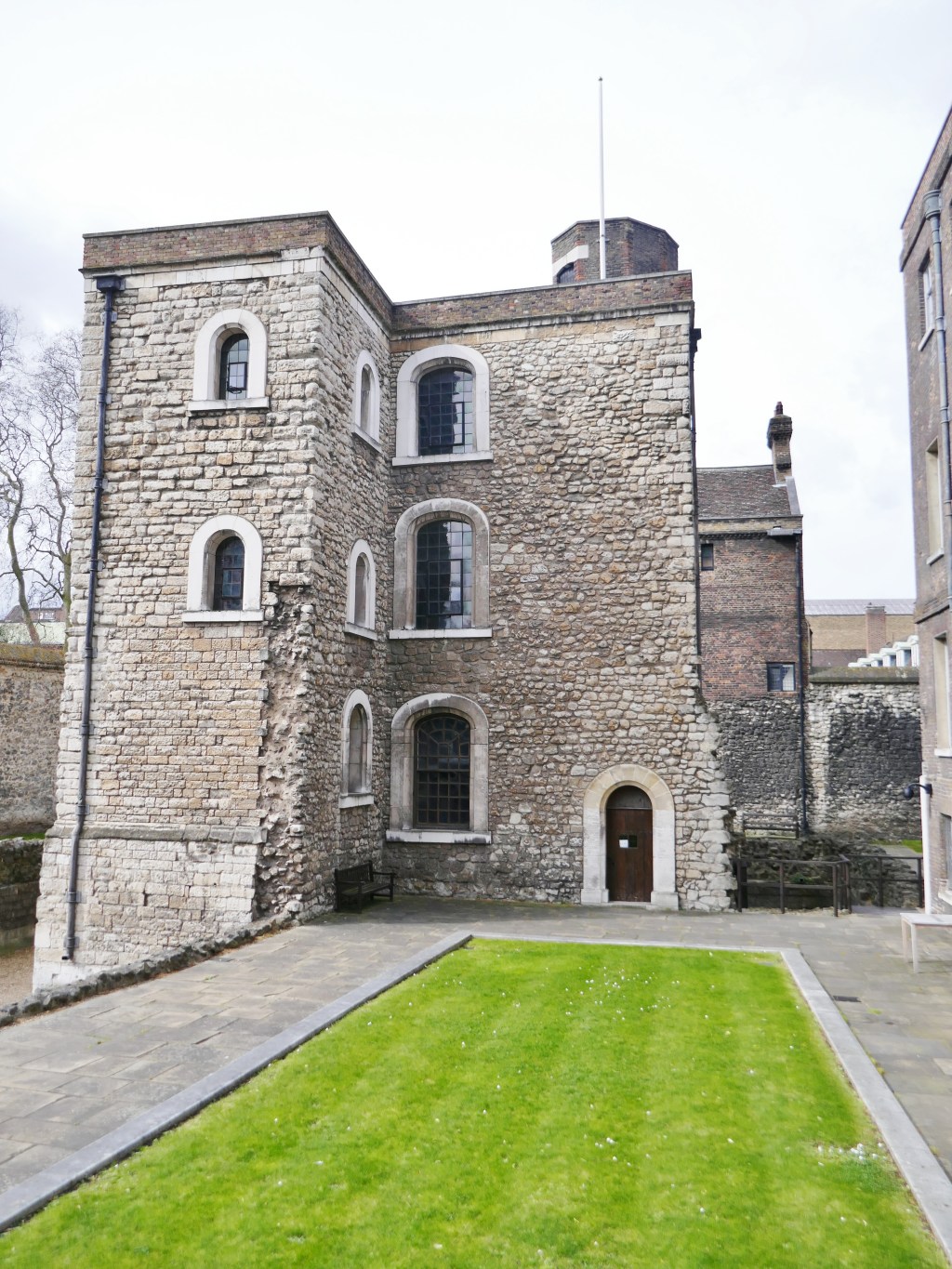
Building London’s blog post on the medieval Palace of Westminster really should have included The Jewel Tower [1] [1a] [1b] as it was and is historically part of the Palace. But it now stands isolated from the main Palace of Westminster, the other side of Old Palace Yard [2] and Abingdon Street. And it’s worth…
-
62: The medieval Palace of Westminster

The Palace of Westminster [1] is perhaps the most important and exciting repository of building materials in all of London, though neighbouring Westminster Abbey, and the Tower of London might object! ThePalace of Westminster has both a world important medieval core of buildings including the extraordinary Westminster Hall, and after a fire in 1830 was…
-
61: Re-discovering Rennie’s London Bridge, at London Bridge!
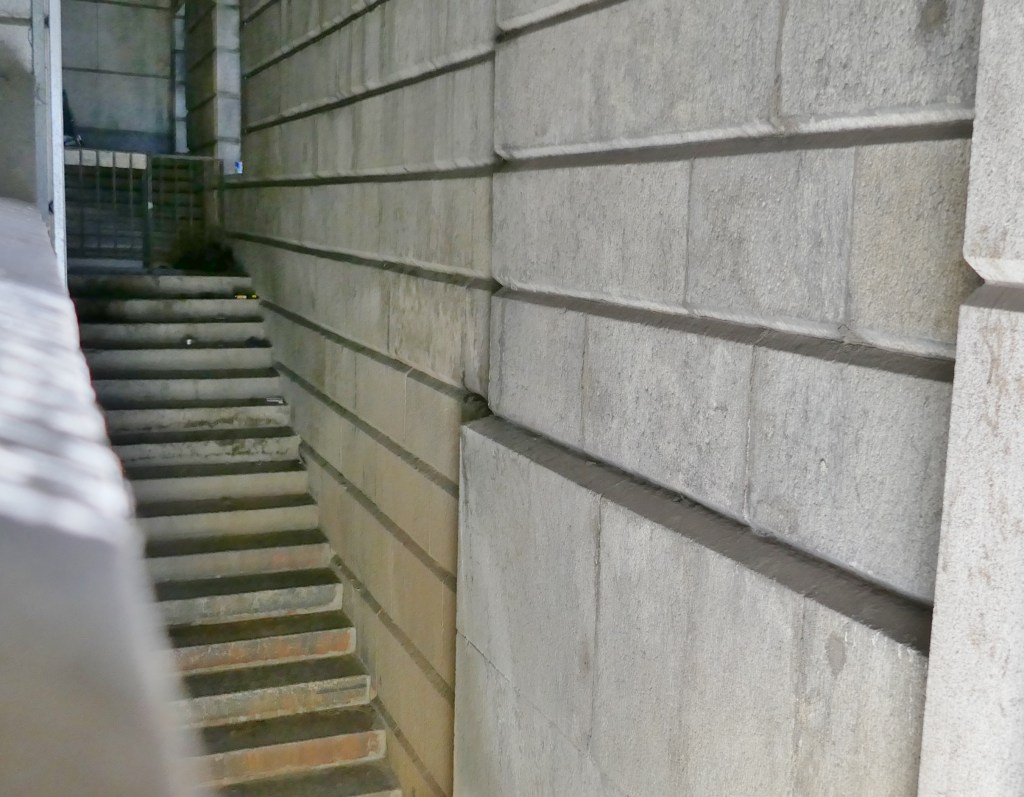
When John Rennie’s, senior and junior, father and son, granite London Bridge of 1831 [1], widened in 1902-4 , was sold in 1968, demolished and the re-erected at Lake Havasu in Arizona in the early 1970s, and an apparently entirely new bridge built [2], the current London Bridge, significant chunks of the 1831 bridge were…
-
60: Barnack stone, one of the earliest stones to be shipped to London
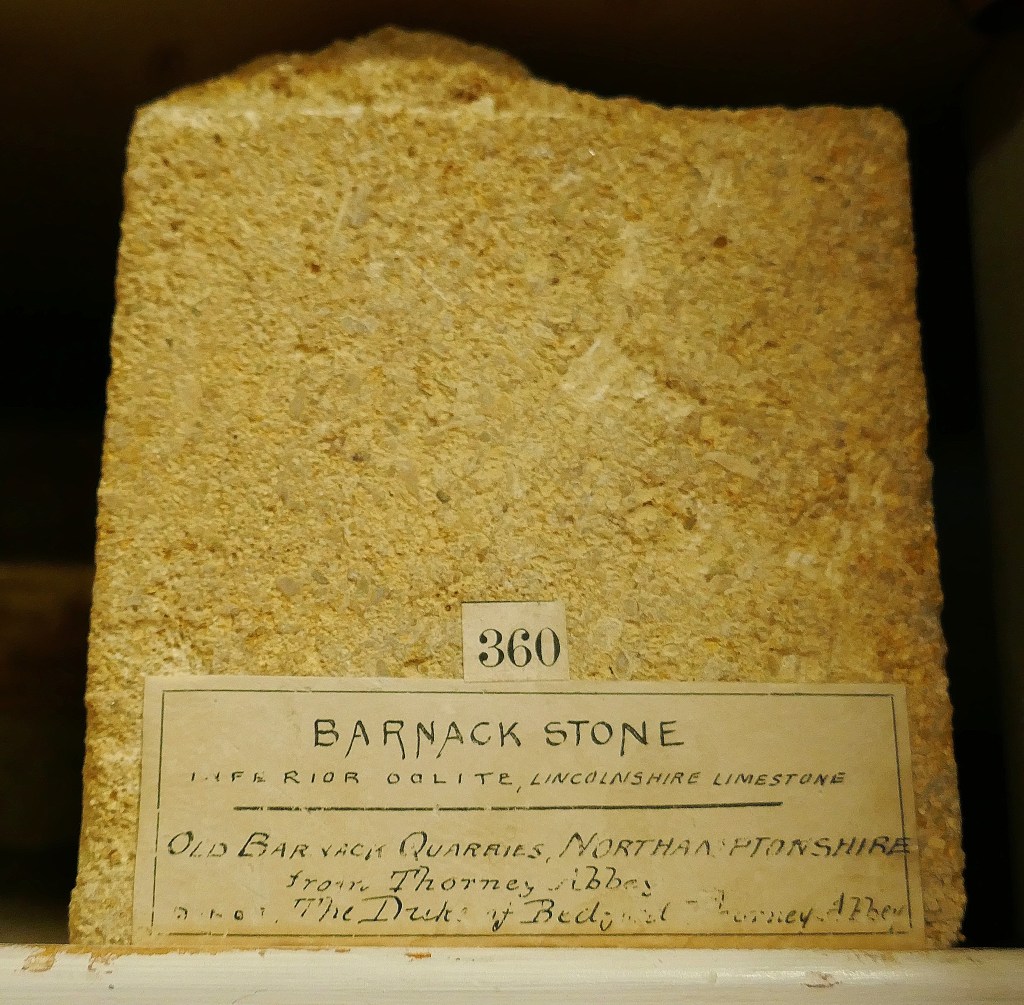
Barnack stone, as mentioned in the previous Building London post, on London’s Roman wall, has been used in England since Roman times. It is a limestone from in and around the village of Barnack, now in Cambridgeshire, but historically in Northamptonshire. [1] Barnack stone generally refers to a rock from around 170 million years…
-
59: The building blocks of London’s Roman wall
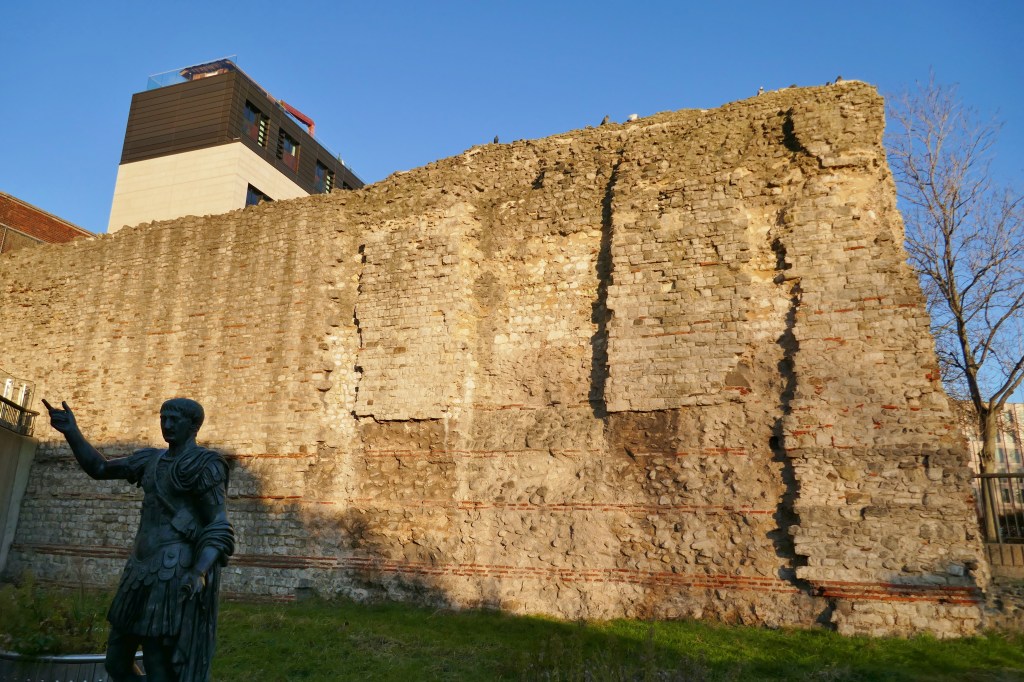
The oldest visible walls in London are the remnants of the 3.2Km 2ndC Roman landward wall, [1] [2] that surrounded the city of Londinium, now known simply as London Wall. There are other Roman walls visible, at Guildhall and the Mithraeum and Amphitheatre at Guildhall but none so large or tall as in London Wall.…
-
58: London’s hidden and not so hidden, wooden streets.
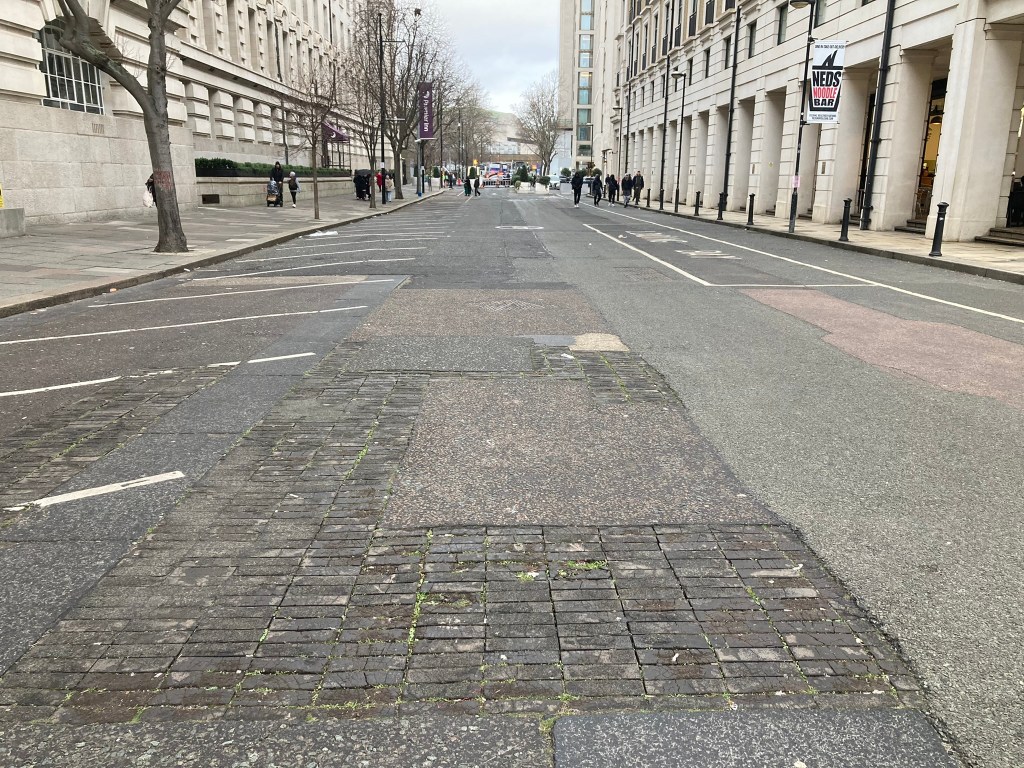
London’s wooden block roads and their manufacturers, have been fairly well covered, by Ian Mansfield, in Ian Visits, [1], Mary Mills [2][3] and Carlton Reid in the fantastic ‘Roads Were Not Built For Cars’ [4] with a brilliant ‘Sherlock Holmes’ skit on road surfaces, Don Clow for the Greater London Industrial Archaeology Society [5] and…
-
57: The Marston Valley Brick Company and it’s cable tramway
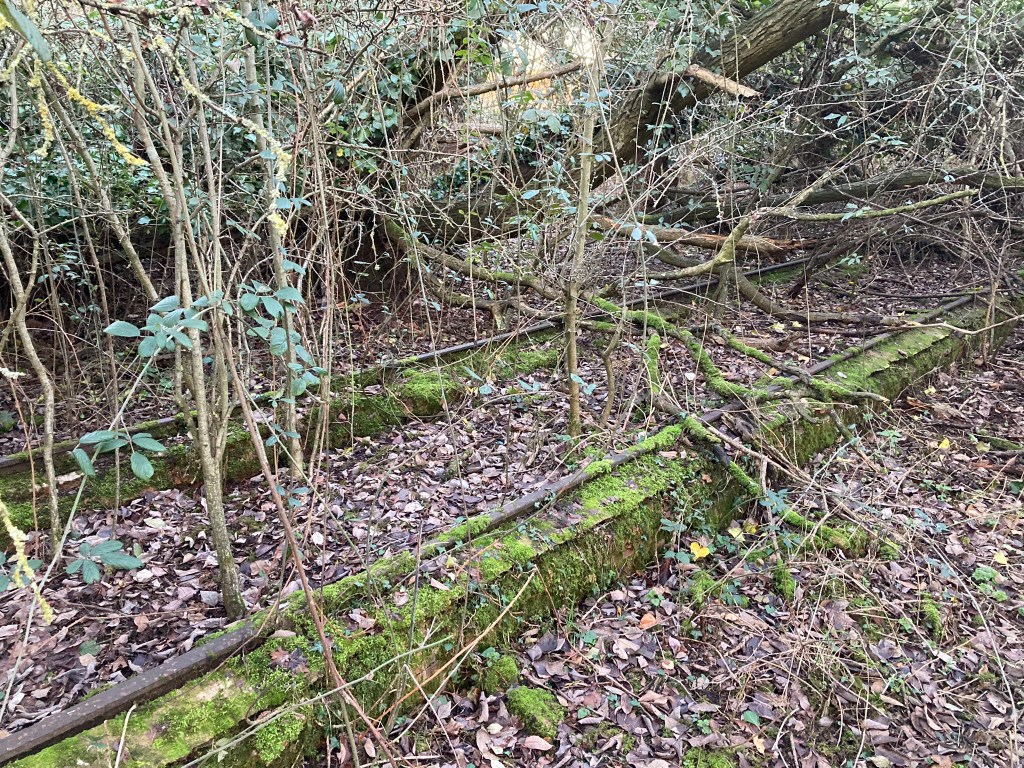
Building London has covered the Bedfordshire Fletton brick industry before, concentrating on the London Brick Company [1] but for 40 years LBC was not the monopoly it became. The Marston Valley Brick Company, in mid-Beds, [2] which was formed in 1929 rivalled LBC for many years till LBC swallowed it up in the late 1960s,…
-
56: More of London Bridge, and much more, at Myddelton House, Enfield
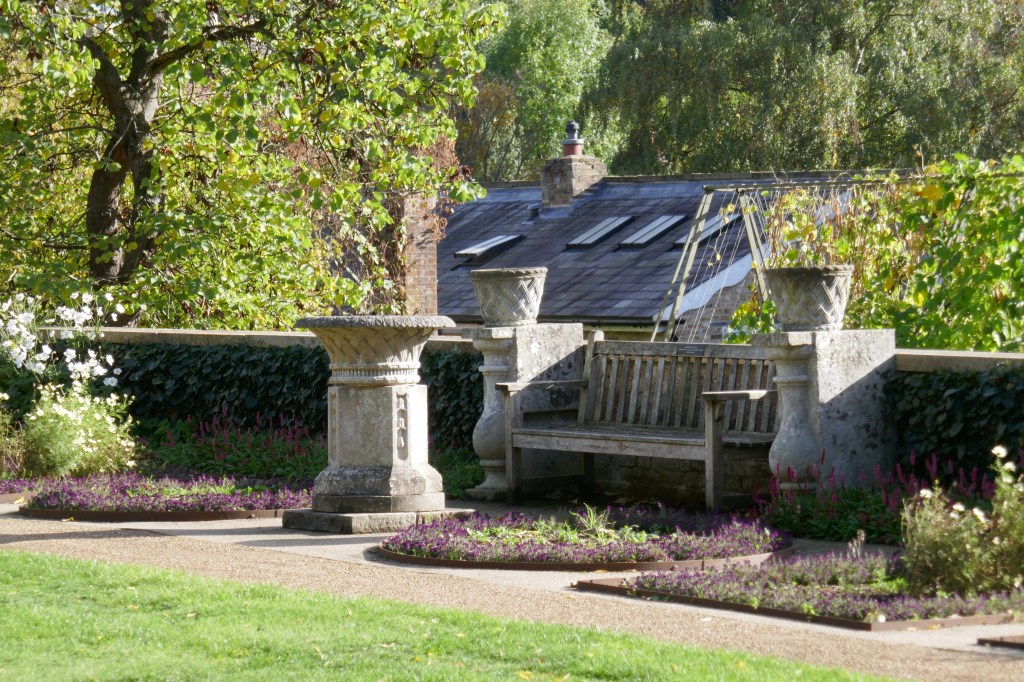
Just north of London and north of Enfield stands the late Georgian Myddelton House, built between 1812 and 1818 from apparently Suffolk bricks [1] The yellow bricks of the 1870 extension are probably local. [2] It was named after the great Welshman Hugh Myddleton [3] who had had the extraordinary New River [4] built in…
-
55: The sandstones of the 1840 Limehouse viaduct.
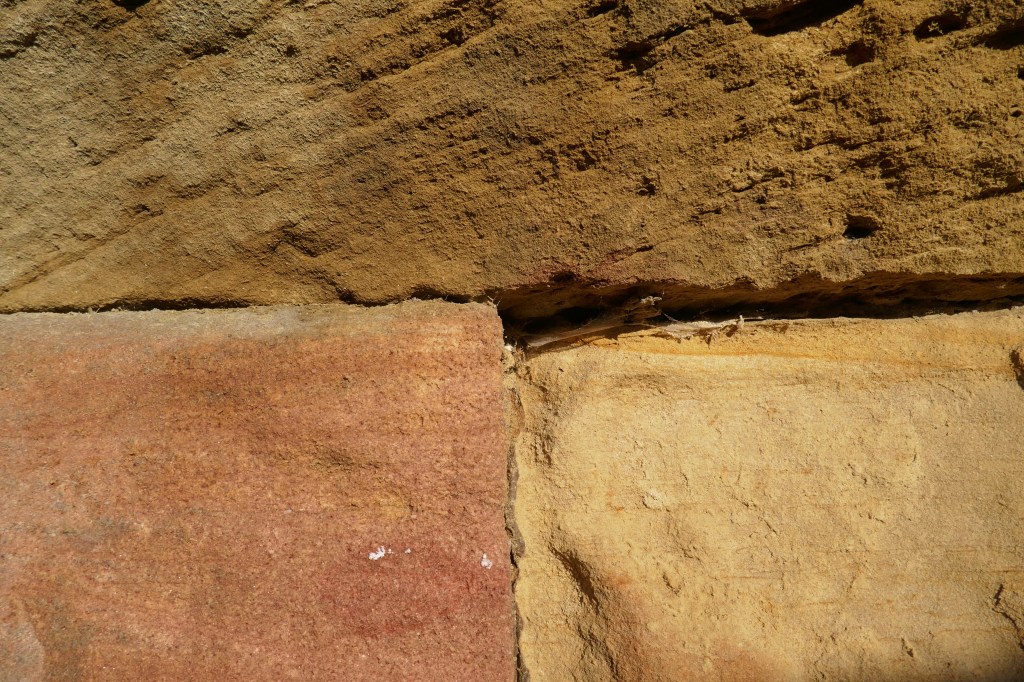
The Limehouse Viaduct on the London and Blackwall Railway, [1] which opened in July 1840, is said to be the 2nd oldest railway viaduct in world [2] [3], though while that is certainly not true as a number of others were built in the 2nd and 3rd decade of that century, though it may be…
-
54: The glass walls of Tottenham
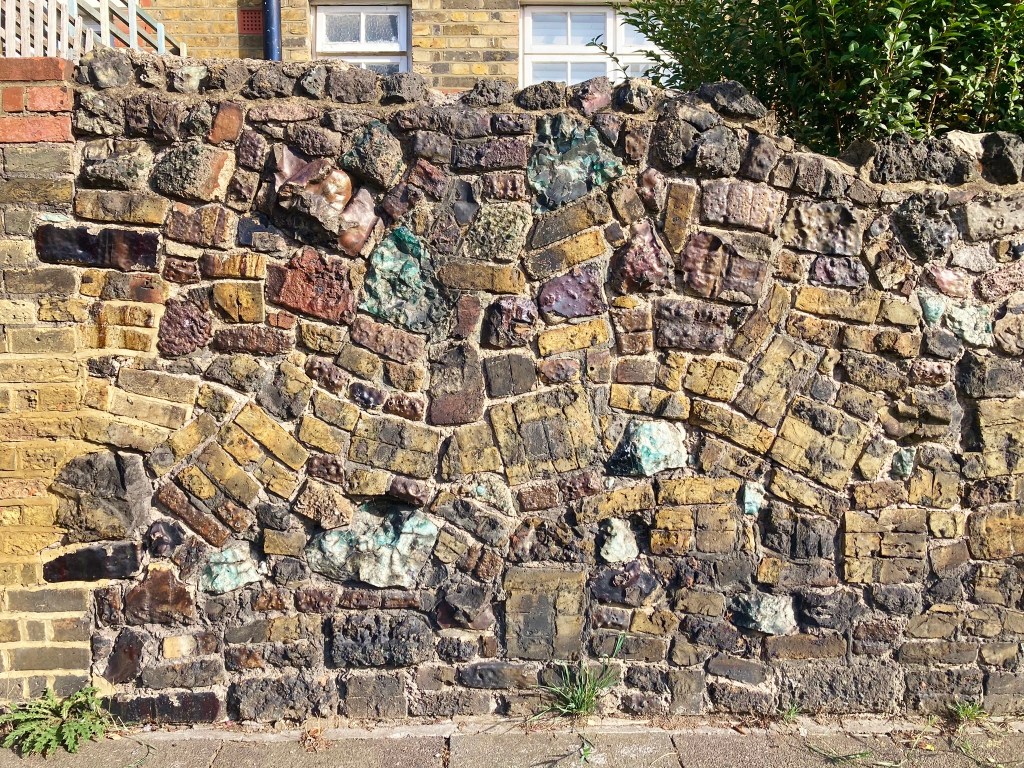
While looking at unusual garden walls for posts 51 and 53, an even more remarkable wall was noticed at Mount Pleasant Road in Tottenham. Not only are there burnt and fused bricks, beautifully vitrified bricks, there are large blocks of beautifully coloured glass, not just vitrified fireclay, but actual glass! A wall made from glass!…
-
53: The London garden walls made of Stourbridge gas retorts
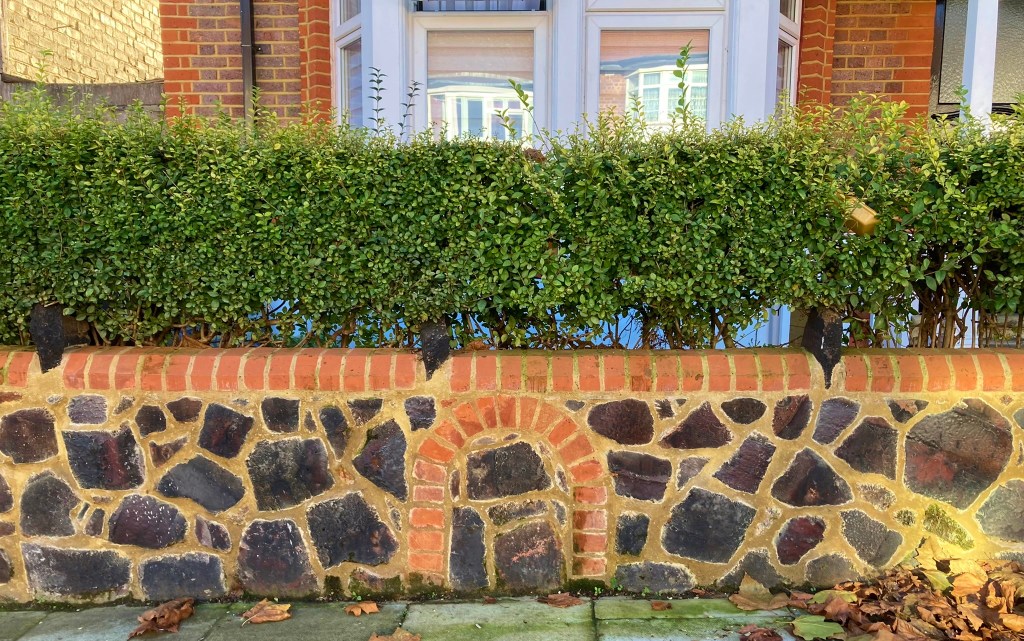
As noted in the previous post on Building London on the beautifully named burrs, wasters, clinkers and crozzles, https://buildinglondon.blog/2022/11/06/51-burrs-and-wasters-clinkers-and-crozzles/ it turns out that many walls initially thought to be built from burnt bricks are built from materials even more unexpected including, as this post will cover, what appears to be the discarded ‘gas retorts’, used…
-
52: A little bit of Southend in Wanstead
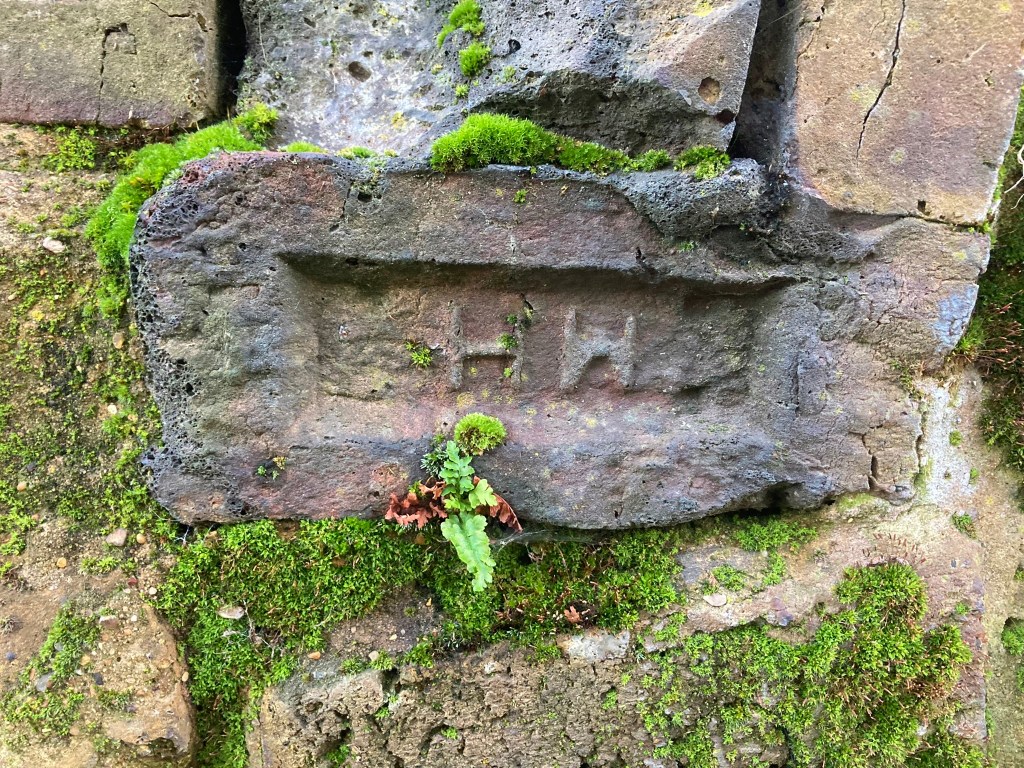
(dedicated of course to Wilko Johnson 1947-2022 who bought a whole lot of Southend joy to London and music in general. ) One of the annoying things about bricks used in London, or anywhere, is that the stamps which identify them, are not visible as they are almost always in the ‘frog’. [1] And yes…
-
51: Burrs and wasters, clinkers and crozzles!
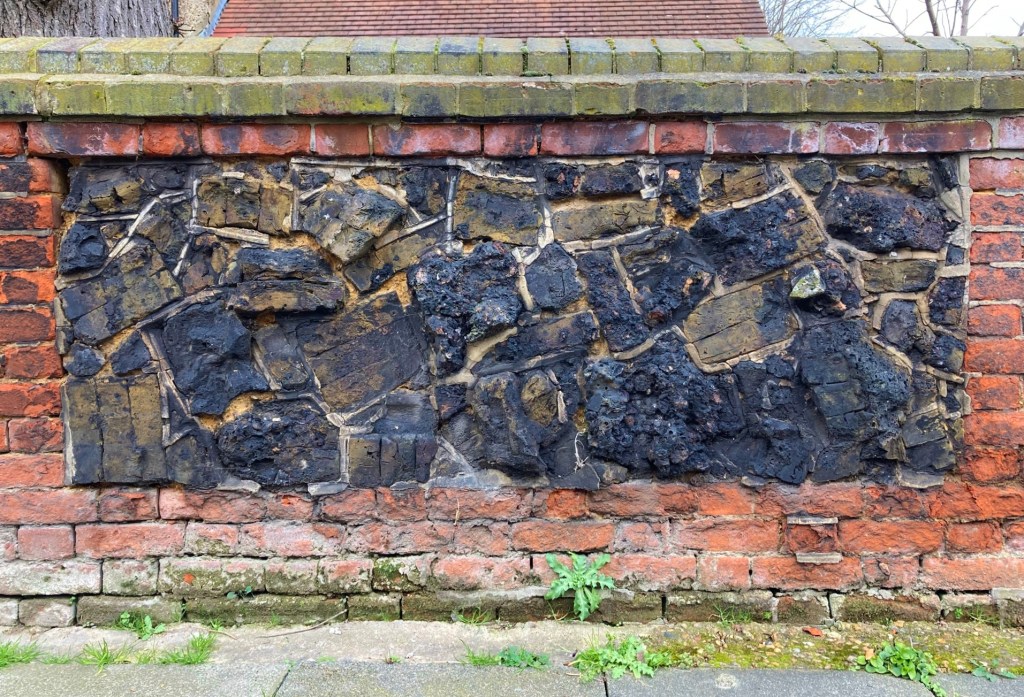
One of the fascinating materials that was used in building London is/are the melted, vitrified, burnt London Stock bricks that were a by products of the old inefficient London brick clamps and kilns. They are known as burrs, clinkers, wasters, crozzles or just burnt bricks. The bricks stacked nearest the heat source in the clamps…
-
Building London 1-50 index
[1] Visit to Swelltor granite quarry in Devon – abandoned corbels for 1901 London bridge widening https://buildinglondon.blog/2021/07/31/a-visit-to-swell-tor-quarry-in-devon/[2] Visit to Foggintor granite quarry in Devon – used for Nelson’s Column and more https://buildinglondon.blog/2021/08/04/foggintor-quarry/[3] Devon granite from 1830s London Bridge at Pickets Lock Sports/Leisure Centre https://buildinglondon.blog/2021/08/10/london-bridge-picketts-lock/[4] Visit to Lamorna quarries and port – granite used in County…
 Building London - what London is made from and where it came from!