Intro
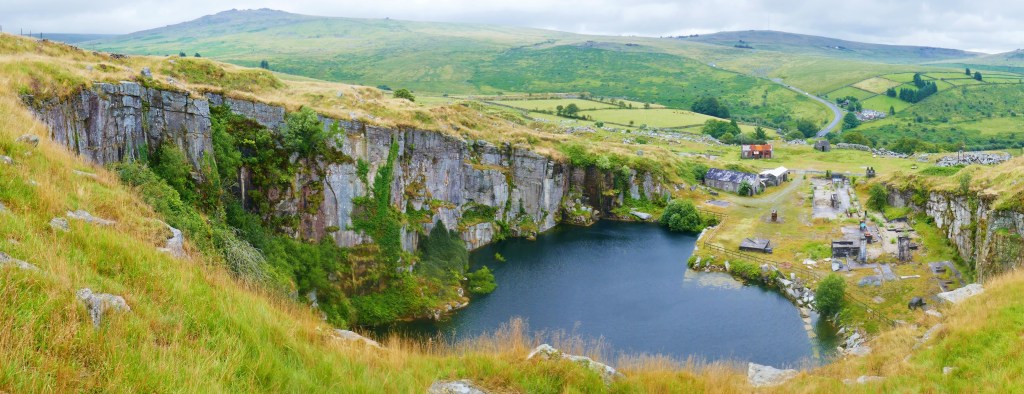
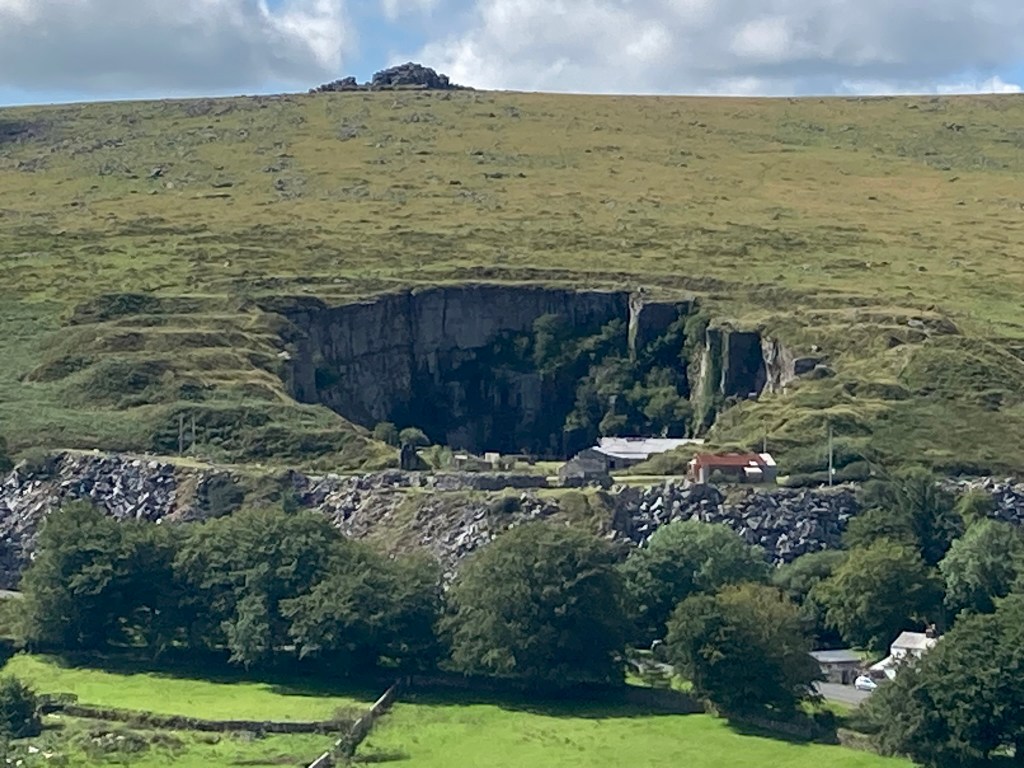
Merrivale Quarry, opened as Tor Quarry in 1874, sits above the hamlet of Merrivale on the western flanks of Dartmoor, [1] [2] and across the valley of the river Walkham from Foggintor [3] and Swelltor quarries [4] and like it’s neighbours played an important, though generally more recent, role in building London. Like Foggintor it is also now flooded, in 2003, but was dug much deeper and quarried for much longer not closing till 1997.
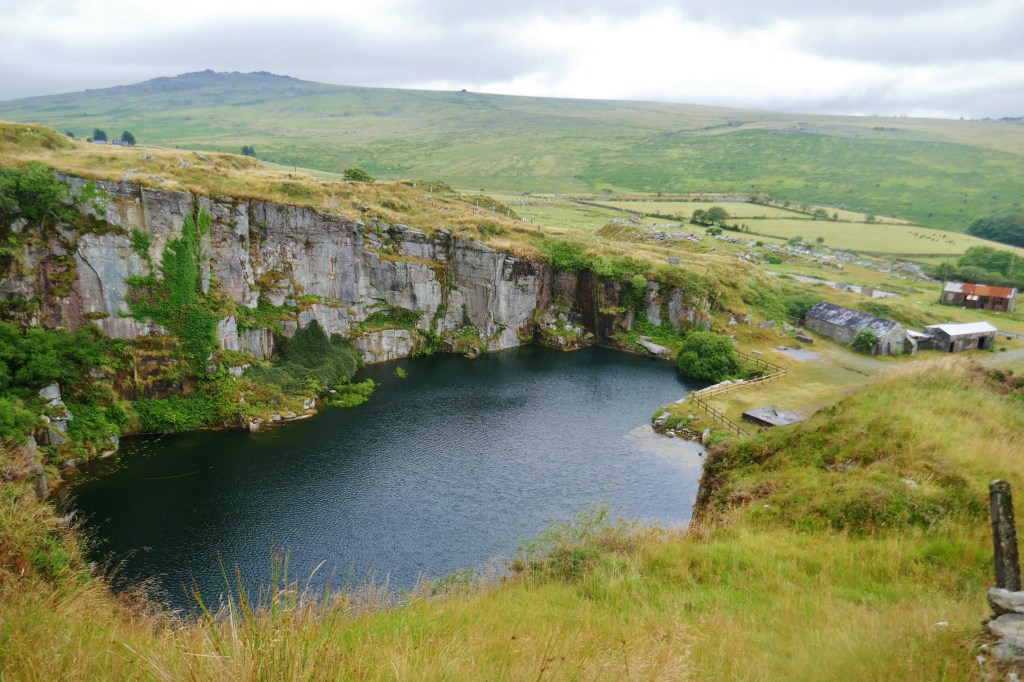
Peter Stanier, the absolute authority on the south-west quarries states that Tor Quarry was set up as a rival to Foggintor, by an ex-employee, William Duke, giving it’s other name of ‘Duke’s Quarry’. Stanier notes that “There was a direct 7 km road link to Tavistock and the railway, but it required great perseverance before the quarry was a success. By the turn of the century, over 100 men were employed by Duke & Co.” [5]
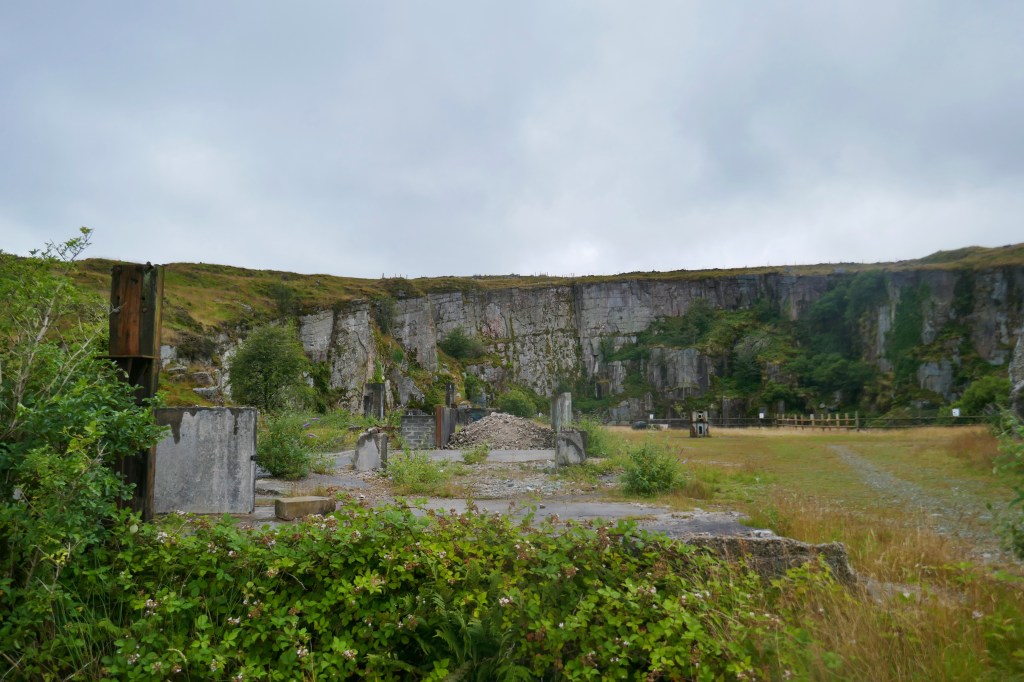
Merrivale Quarry, as it came known to be, continued to be open all the way through to the 1990s, after much quarrying in the 1960s and 1970s, but in the later years actual quarrying stopped and the site was used for finishing imported granite from around the world.
What kind of granite
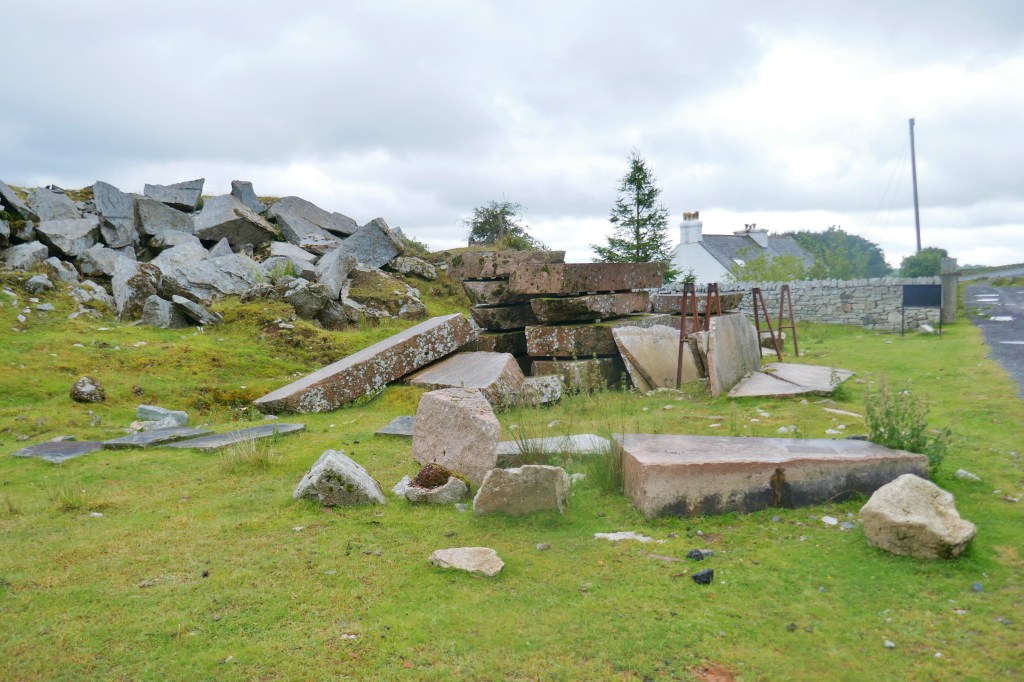
Granite quarried from Merrivale is variously identified as a Giant Granite, Foggintor-Merrivale Granite or a Blue Granite.
The Devon Building Stone Atlas refers to the stone as “The so-called ‘Giant Granite’ is a coarse grained, grey granite containing large euhedral feldspar megacrysts (sometimes up to 30 % by volume). Quarried at Haytor, Princetown and Merrivale…” [6]
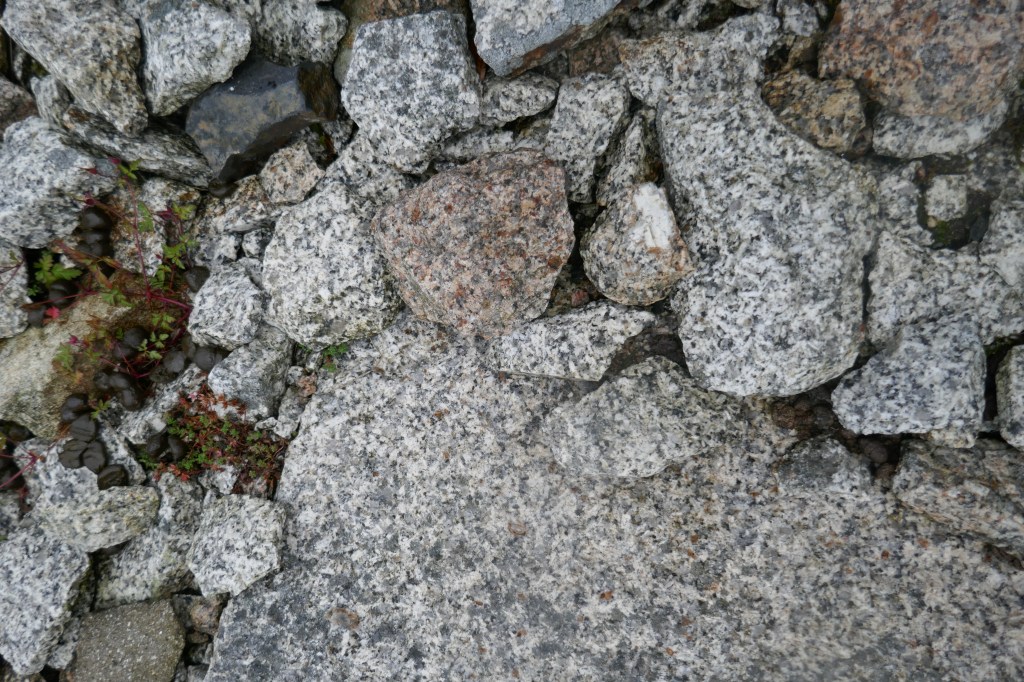
Cobbing and Usher identify the granites as a specific … “… Foggintor-Merrivale Granite … which crops out to the west of Princeton in two quarries (D17) and (D17.1), is a medium to coarse grained granite with a distinctive lithology, due principally to the presence of abundant small K-feldspar megacrysts, which provide a felted fabric forming the greater part of the rock.In some cases larger K-feldspars and large quartzes are also present (Figure 2c). The high content of small tabular K-feldspar megacrysts suggests a general affinity with the Bodmin Moor and Carnmenellis plutons.” [7]
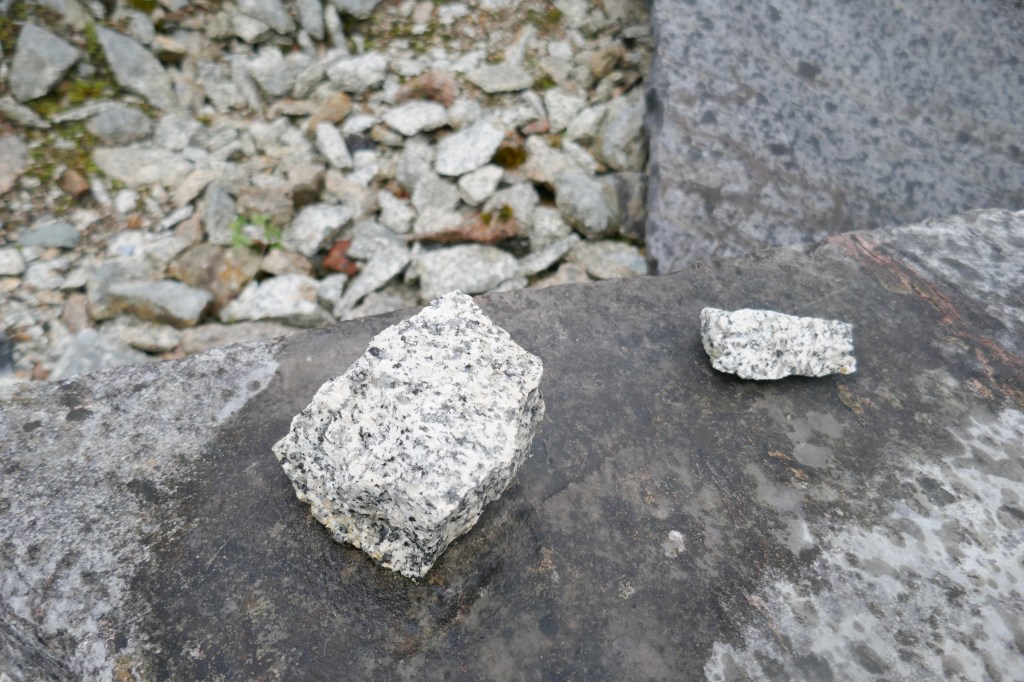
And the Open University Geology Society say Blue Granite was quarried there “The Dartmoor Blue Granite has long been a valued building and ornamental stone as it could be worked with a low risk of fracturing but also had a sufficiently coarse crystalline texture to be decorative. It was quarried at many locations beside Haytor: Merrivale and Foggingtor being some of the larger and longer lived…” [8]
Merrivale granite and London
While massive amounts of granite was quarried from Merrivale it’s usage in London is mainly in the later 20thC though Stanier identifies it being used for Vauxhall Bridge in 1899-1903 and for the widening of the Rennie London Bridge in 1902-4, on both occasions along with granite from neighbouring Swelltor. [5]
Ashurst and Dimes in their ‘Conservation of Building & Decorative Stone’ state “Stone from … Merrivale Quarry which … yields a poorly megacrystic stone was used to clad the present (1967) New Scotland Yard in Victoria Street… Stone from this quarry was used also for part of Unity House, Euston Road (1914) and more recently, for British Petroleum House and Ashdown House, both in Victoria Street, London and for the polished parapets of the new (1973) London Bridge.” [9] [10]
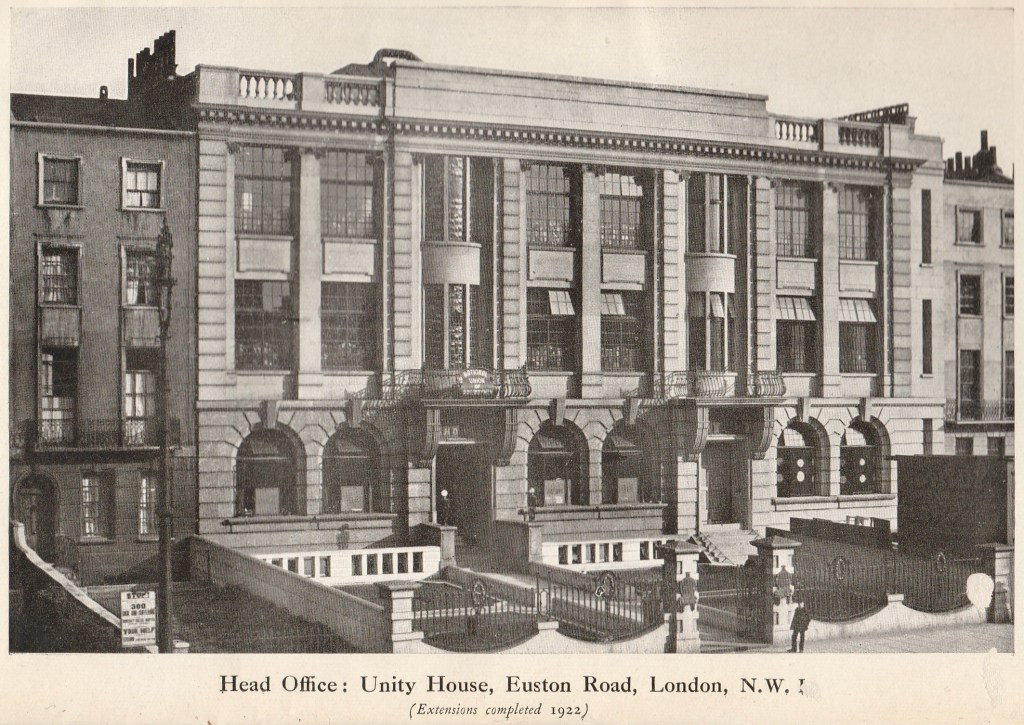
The only identifiable building from that period then, Unity House, the HQ of the rail workers union on Euston Road was sadly demolished in the 1980s. [11]
London Pavement Geology identifies several buildings from the 1970s in Victoria Streetwith Merrivale granite. [12]
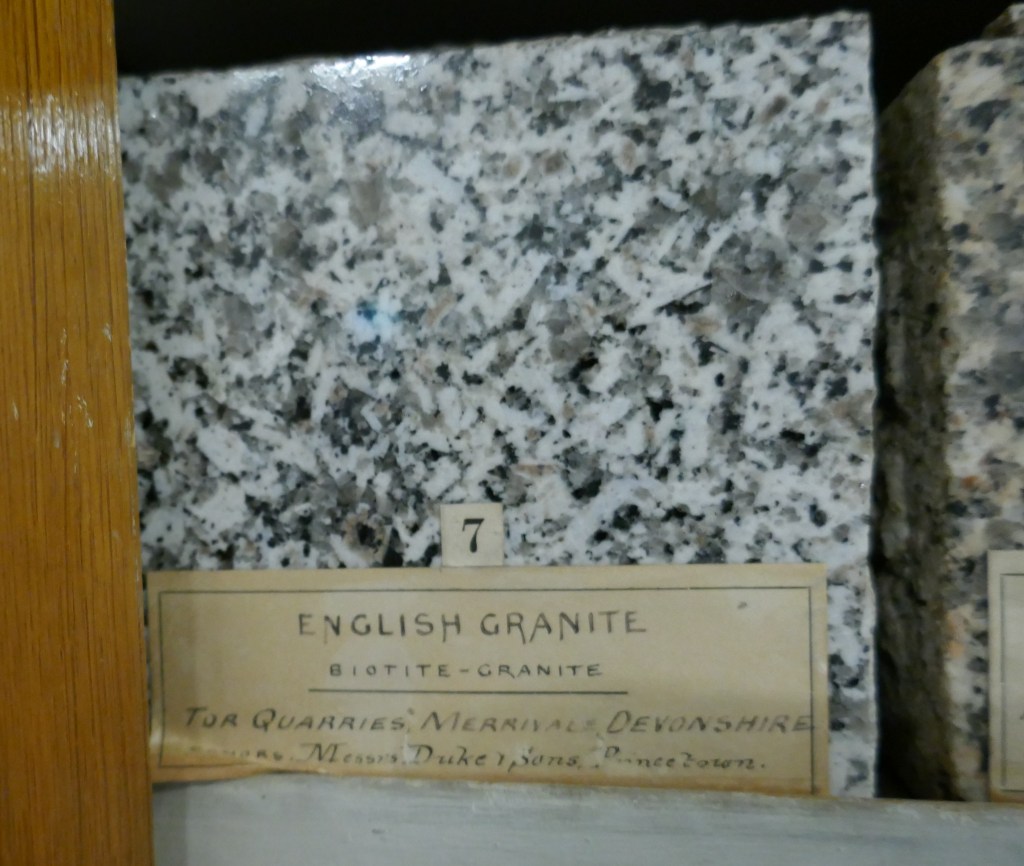
Watson in 1911 stated “ The Tor quarries near Merrivale … yield a light grey biotite-granite which was used for the foundations of the Houses of Parliament in 1840.” but the assumption here must be is he is referring to the Foggintor Quarry as Tor Quarry was not yet open. [13]
Stanier states Merrivale was used significantly in London in the 1970s: “Perhaps the largest cladding contract undertaken in Britain was for the Victoria Street redevelopment during 1972-77, supplied from Merrivale Quarry on Dartmoor, then owned for thirty years by the contractors, Anselm Odling (Construction) Ltd.”
And most famously for cladding London Bridge, “During the decade, the rebuilding of London Bridge (1971-3) required 3,000 tons of granite for the piers, supplied from Hantergantick Quarry, with granite for the parapets and cladding from Merrivale.” [5]
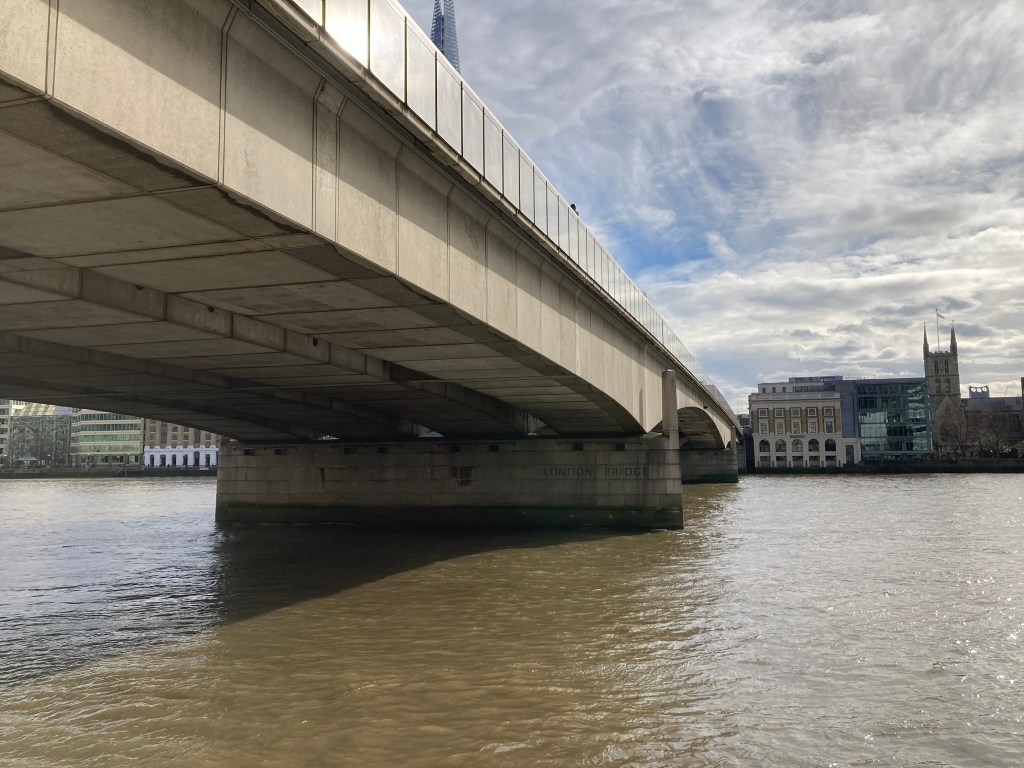
The last granite to be taken from Merrivale was used for the modern ugly Portcullis House on Bridge Street in Westminster. [14]
But Merrivale also plays a role with the previous London Bridge, one of the iconic London constructions, Rennie’s early 19thC London Bridge. When the Haytor granite façade was sold to Robert McCulloch for his Lake Tavasu resort in Arizona, the stones, already numbered by the Rennies, were taken to Merrivale in the late 1960s to be reduced in thickness. The ‘London Bridge’ in Lake Tavasu is essentially concrete with a veneer of the old Devon granite. [15]
“The bridge’s US buyers decided it would be too expensive to transport the whole bridge to the States. So after the bridge was dismantled it was transported to Merrivale Quarry where 150mm to 200mm were sliced off over a thousand pieces for use as cladding for a concrete bridge.” This article from 1995 also suggests that what remained was still stacked there in the 1990s but there’s no evidence of that now.[16]
Visiting
Unlike some many old south-west quarries there is no public access to Merrivale Quarry, though when Building London visited the gate was gone but that may not always be the case. There was no one on site to explain access and there was a fence stopping access to the quarry pool. However, spectacular views of the quarry can be had from the side and above and over from the Merrivale stones. While Dartmoor is all ‘right to roam’ there is a footpath up to the top of the quarry from a small parking area just off the B357 road from Tavistock.
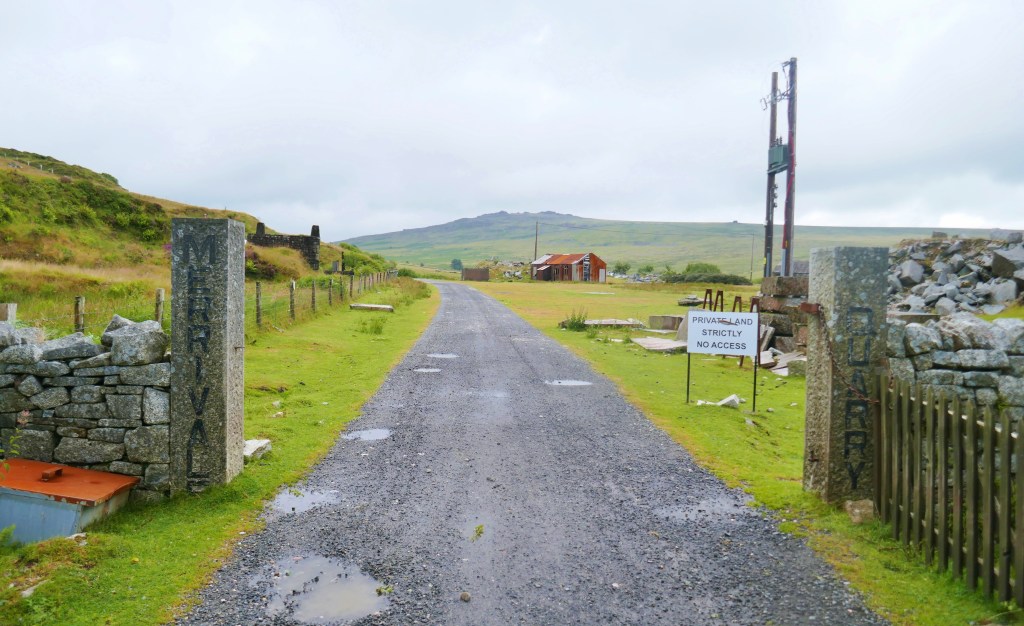
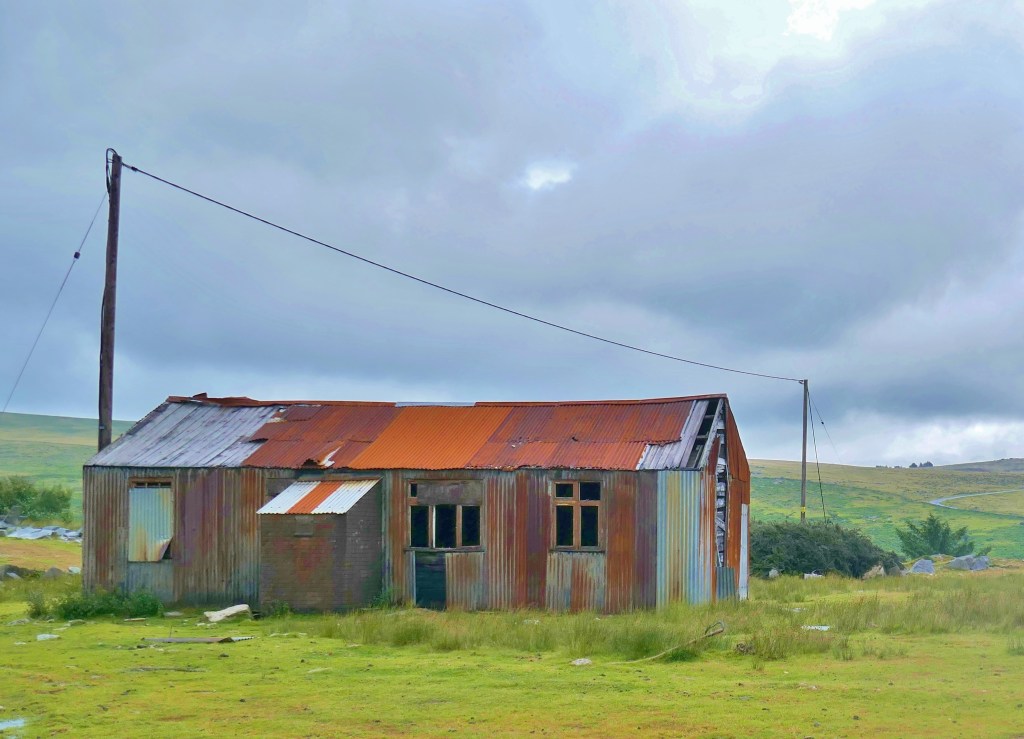
One of the sites ‘inaccessible’ at Merrivale is the ‘tin’, corrugated-iron, building that was built as a Wesleyan Chapel in 1961 and converted to a mess room in 1962. [17] It’s not been demolished but is rotting away.
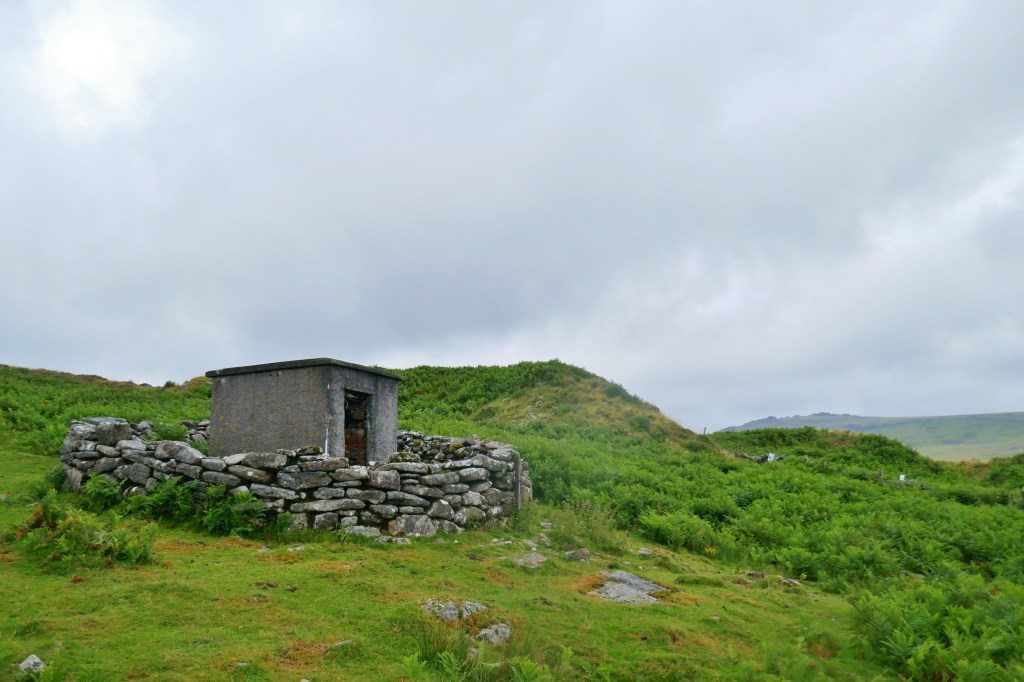
And there is much else to see! There is the old quarry explosives store to the east of the quarry, just off the footpath and very obvious [18].
And above the quarry on the slopes of Middle and Great Staple Tors ( a corruption of steeple ) are numerous road-sett makers ‘bankers’ ( or benches). [19] [20] [21]
Middle and Great Staple Tor are also definitely worth seeing. [22][23]
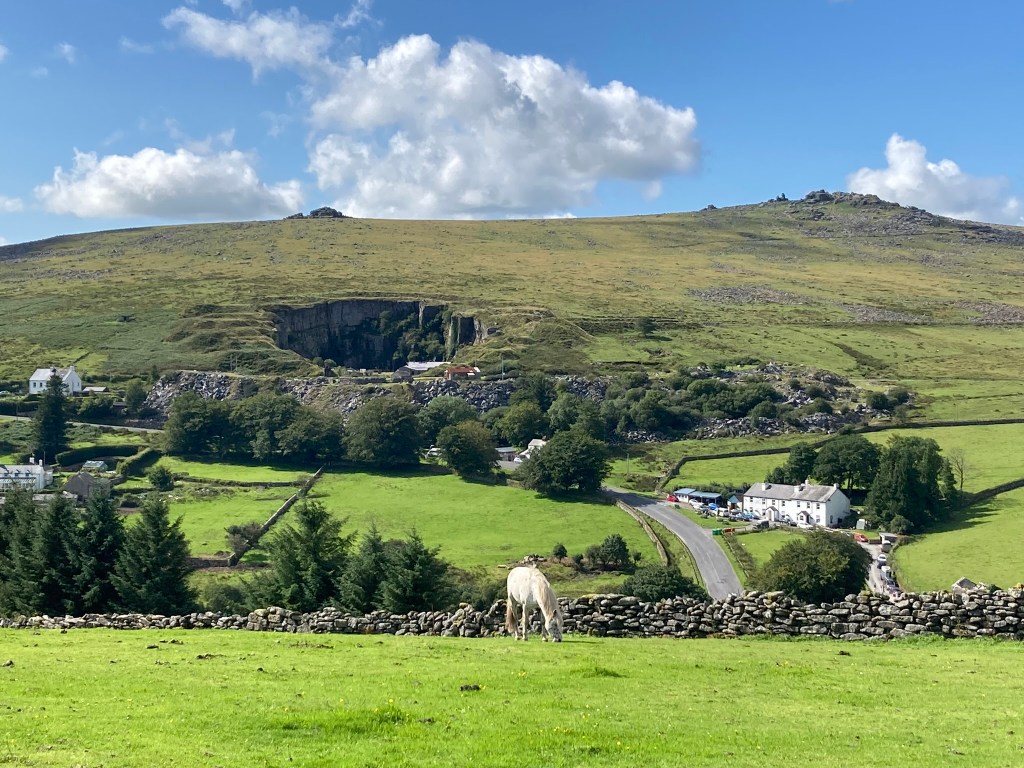
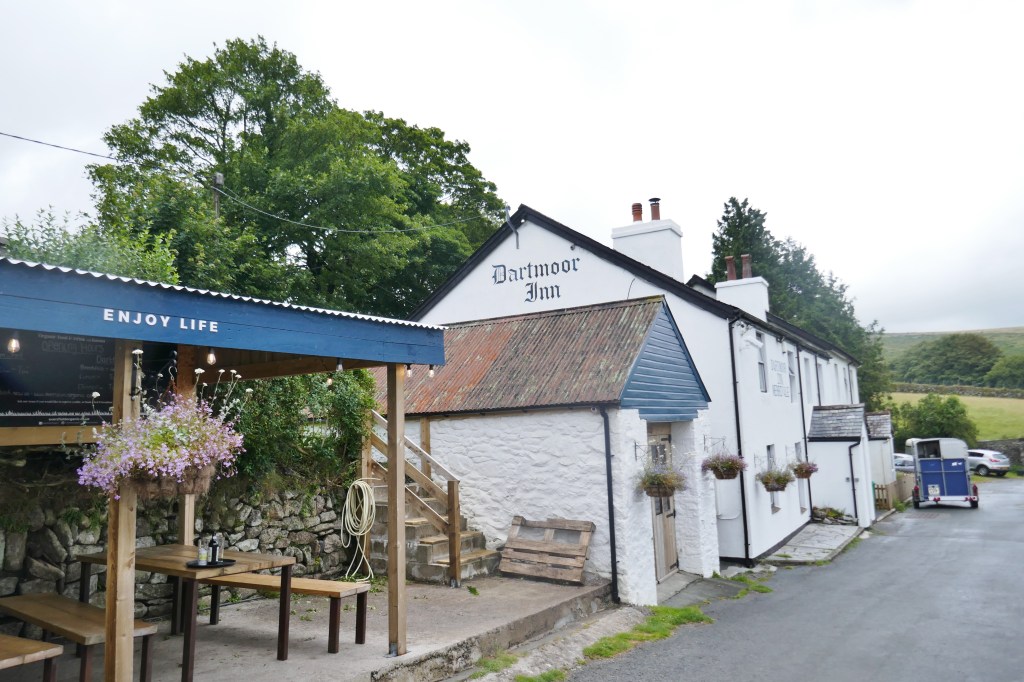
The hamlet and it’s old bridge from the 1770s [24] is very lovely, in the summer, and probably very lonely too in the winter, and the Dartmoor Inn pub serving local organic food looks good! [25]
And do visit Foggintor and Swelltor quarries and see the abandoned corbels from the widening of London Bridge in 1902. [3] [4]
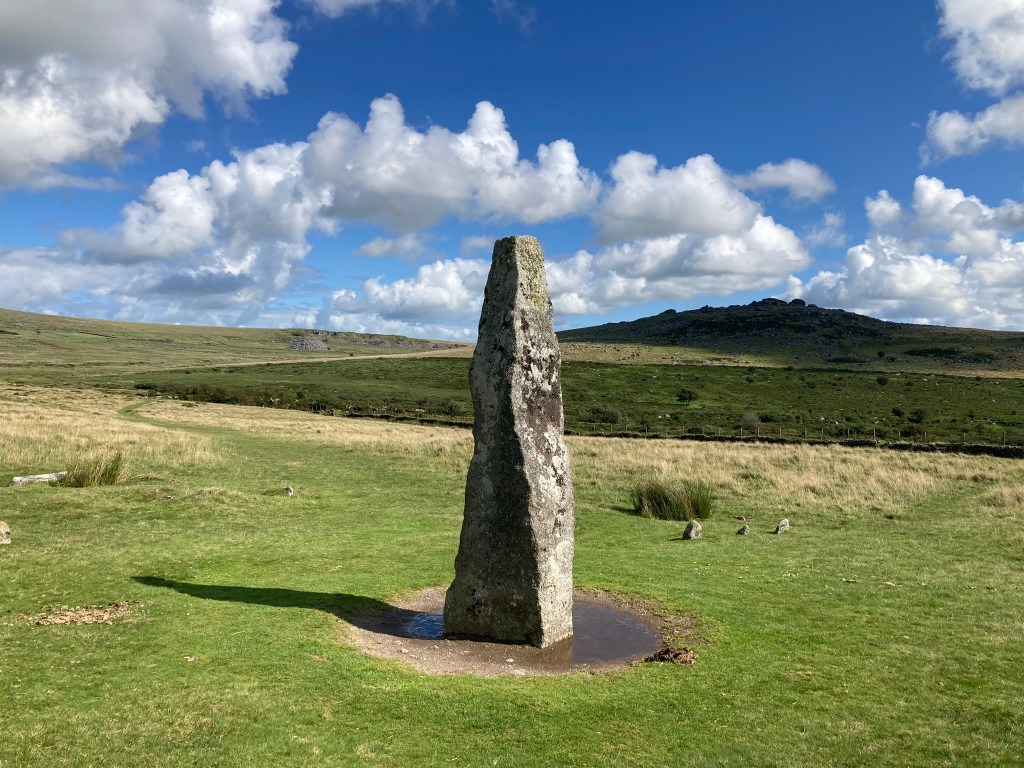
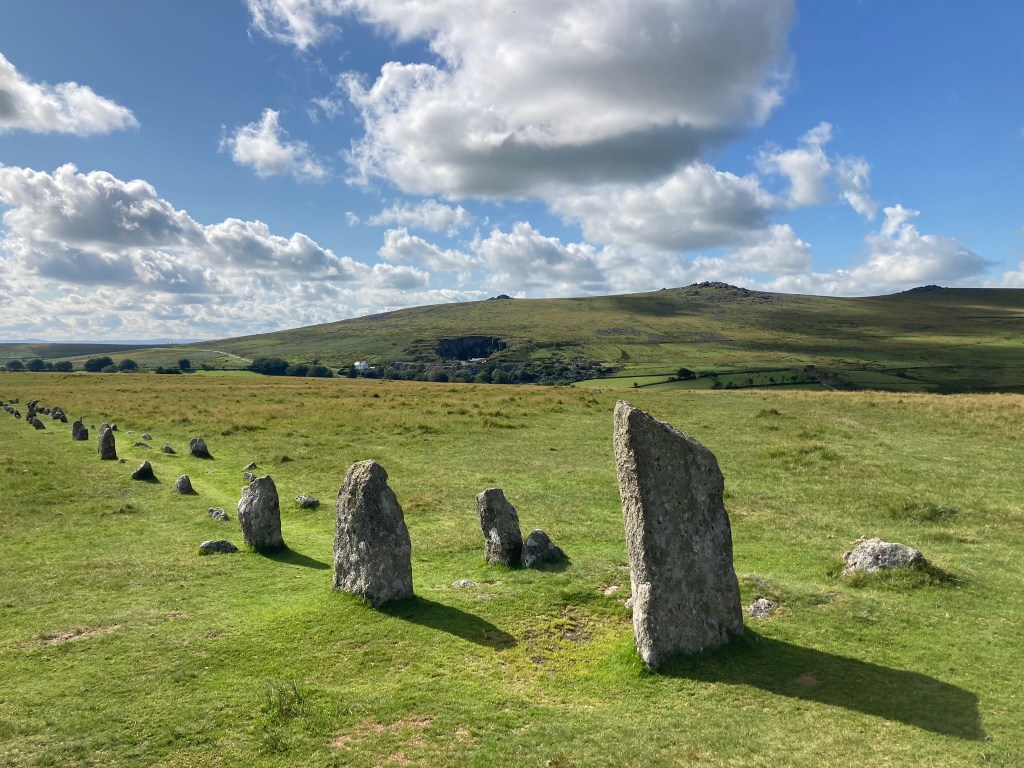
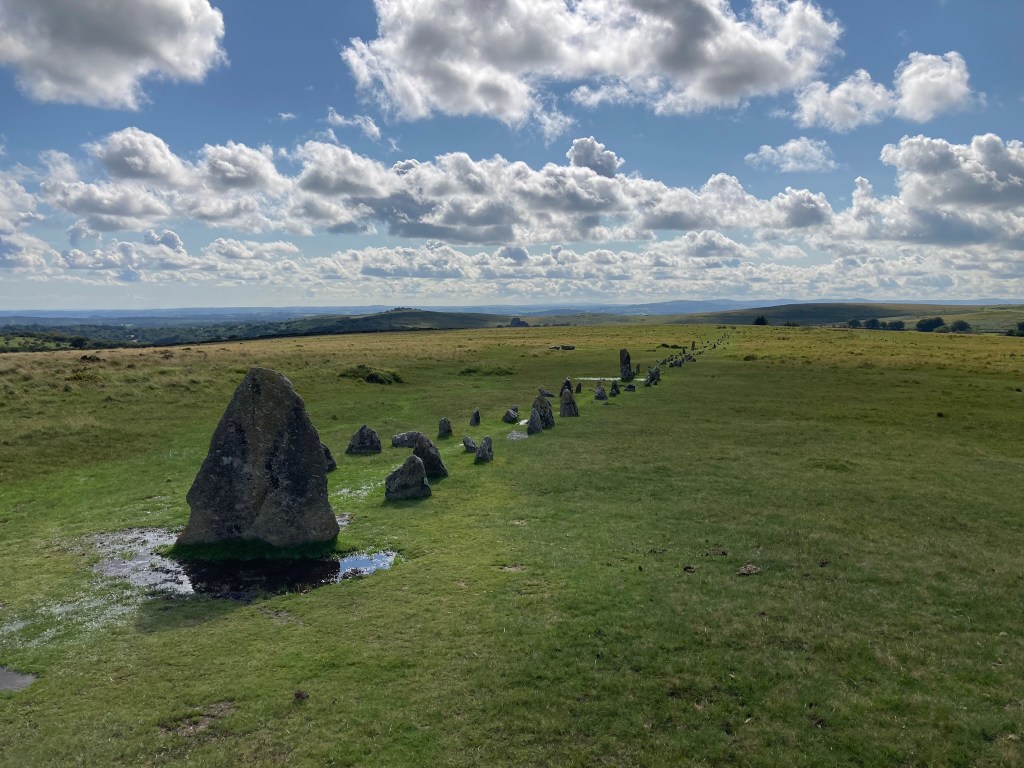
On the way to those you can see the extraordinary, and important, though much damaged in the 19thC, neolithic Merrivale standing stones, stone rows, stone circle and roundhouse settlements where you can look back and see Merrivale Quarry. [26][27[28][29]
28Days later has a good report here on Merrivale Quarry from 2007 but the crane and many of the buildings were removed soon after. [30]
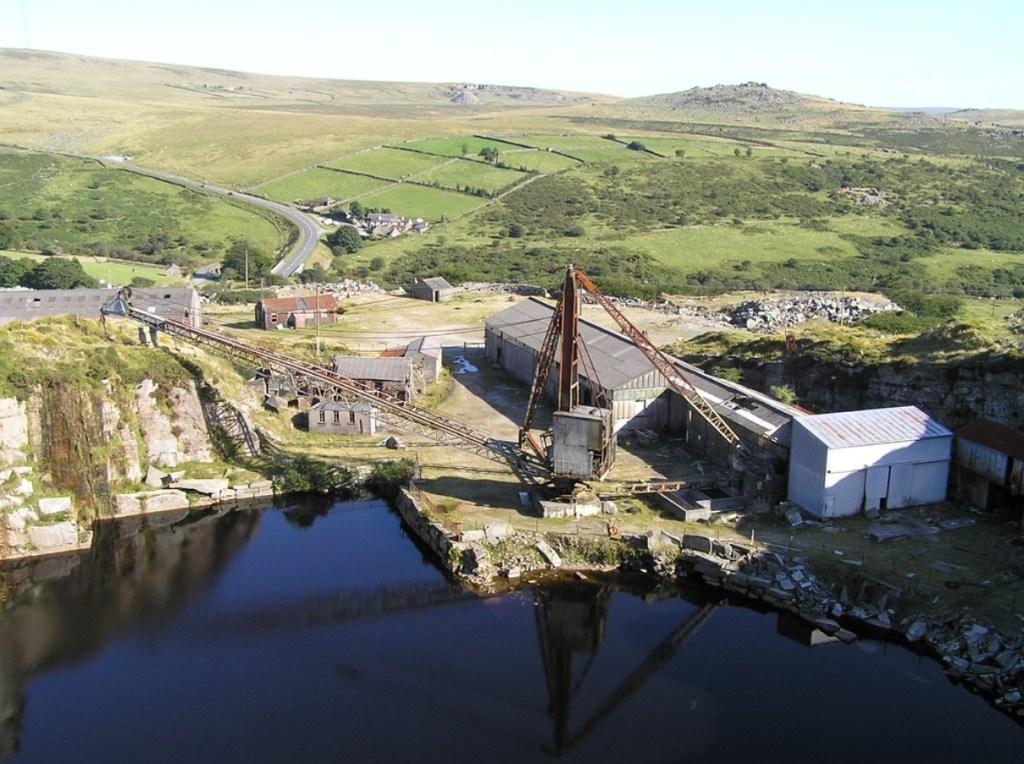
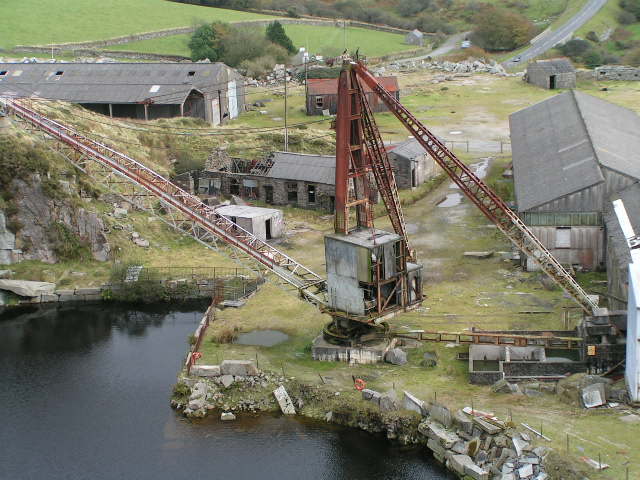
“Rotting Crane, Merrivale Quarry. This former 35 ton Derrick Crane, built by Butters Cranes Ltd. of Glasgow in 1972, was used to shift the quarried stone. The quarry closed in December 1997 and much of the cutting machinery remained in the decaying sheds in this picture until contractors removed all the scrap metal, including the crane in late 2007. The deep flooded pit and huge spoil tip dominate the landscape here now.” © Brett Sutherland licensed for reuse CCL
Getting there
Location: https://www.mindat.org/loc-1521.html
Public Transport: Visiting Merrivale is not a day out from London by public transport. You have to get a train to Plymouth, then the 103 bus to Tavistock then the 98 from Tavistock along the B3357 to Merrivale. It has recently been announced that the railway from Plymouth to Tavistock will be re-opened though don’t hold your breath. [31]
Cycling: Swelltor is high up in Dartmoor and to cycle there means some big climbs from whatever direction. Off-road bicycles have a route following the old Princetown Railway. [32]
Driving: Merrivale is on the main B3357, running east-west between Tavistock and Ashburton, one of only 2 roads that crosses Dartmoor. There is parking by the pub and just off the main road by the quarry.
References
[1] https://en.wikipedia.org/wiki/Merrivale,_Devon
[2] https://www.legendarydartmoor.co.uk/2016/03/31/merri_vale/
[3] https://buildinglondon.blog/2021/08/04/foggintor-quarry/
[4] https://buildinglondon.blog/2021/07/31/a-visit-to-swell-tor-quarry-in-devon/
[5] The Granite Industry Of South-West England, 1800-1980: A Study In Historical Geography: Peter Stanier –
PhD 1985University of Southamptonhttps://eprints.soton.ac.uk/413336/1/85075041.pdf
[6] http://www.devonbuildingsgroup.org.uk/uploads/Devon_Building_Stone_Atlas.pdf
[7] Textural Features Of South -West England Granites : A Reinterpretation
J. Cobbing and M. Clarke http://ussher.org.uk/wp-content/uploads/journal/2006/09-CobbingClarke06-granites.pdf
[8] https://ougs.org/southwest/local-geology/97/dartmoor-granite-tor-formation-and-the-haytor-granite-tramway/
[9] https://issuu.com/roxanasimona/docs/john__ashurst_-_conservation_of_bui
[10] https://dokumen.tips/documents/john-ashurst-conservation-of-building-and-decorative-stone.html
[11] https://sslh.org.uk/2022/07/06/castles-of-the-labour-movement-inside-the-trade-union-head-office-building-boom/
[12] http://www.londonpavementgeology.co.uk/geo-sites/
[13] John Watson British and Foreign Building Stones 1911 https://archive.org/details/britishforeignbu00watsrich
[14] https://www.ucl.ac.uk/~ucfbrxs/Homepage/walks/Embankment.pdf
[15] https://www.bbc.co.uk/news/resources/idt-sh/the_bridge_that_crossed_an_ocean
[16] https://web.archive.org/web/20080506144638/http://www.contractjournal.com/Articles/1995/12/21/27226/london-bridge-is-still-here.html
[17] https://www.heritagegateway.org.uk/gateway/Results_Single.aspx?uid=MDV46481&resourceID=104
[18] https://dartefacts.co.uk/dartefact/merrivale-quarry-explosives-store/
[19] https://dartefacts.co.uk/dartefact/sett-makers-bankers/
[20] https://www.legendarydartmoor.co.uk/2017/07/06/dartmoors-bankers/
[21] https://www.dartmoorcam.co.uk/CAM/previouswalks/2010-1-20_SettMakersBankers/rees-jeffreys.htm
[22] https://www.torsofdartmoor.co.uk/tor-page.php?tor=great-staple-tor
[23] http://www.richkni.co.uk/dartmoor/staple.htm
[24] https://www.legendarydartmoor.co.uk/2016/03/31/merri_vale/
[25] https://eversfieldorganic.co.uk/pages/eat-dartmoor-inn-merrivale
[26] https://www.english-heritage.org.uk/visit/places/merrivale-prehistoric-settlement/history/
[27] https://www.legendarydartmoor.co.uk/2016/03/18/merri_centre/
[28] http://www.stone-circles.org.uk/stone/merrivalecircle.htm
[29] https://stonerows.wordpress.com/gazetteer/region/dartmoor/merrivale-2/
[30] https://www.28dayslater.co.uk/threads/merrivale-quarry-dartmoor.21208/
[31] https://www.devon.gov.uk/news/government-support-for-tavistock-to-plymouth-rail-reinstatement-earns-warm-welcome/
[32] https://www.dartmoor.gov.uk/__data/assets/pdf_file/0033/77577/Granite-and-Gears-Princetown-Railway-cycle-leaflet2015.pdf
Note all photos CC BY-NC-ND
See https://creativecommons.org/share-your-work/cclicenses/

 Building London - what London is made from and where it came from!
Leave a comment